
A Brief Interview with Maurice Roberts on the New Perspective
Question: Is it any surprise to you that there is currently controversy in Reformed and Evangelical circles over the doctrine of justification, or did you see it coming?
Rev. Roberts: I was rather slow in realizing the danger, probably because I ministered in a somewhat remote situation. So I did not see it coming, alas. I am deeply amazed that any evangelical could allow this doctrine to slip. I ascribe it to small conviction of sin in these scholars.
Question: Is there something fundamentally at stake in the “New Perspective on Paul?”
Rev. Roberts: It is theological revisionism and shows fundamental departure from orthodoxy at crucial points: a low view of sin; a concession to fallen man’s instinct to save himself; an overshadowing of the forensic by the federal; eradication of imputation; demeaning of the significance of Christ’s propitiatory work.
Question: Some have claimed that the Reformed doctrine of justification makes people careless in life. How would you respond to this charge?
Rev. Roberts: There are three aspects to justification. A man is justified (1) meritoriously, by Christ’s blood; (2) instrumentally, by faith alone; (3) declaratively, by good works. Though good works do not enter into our justification, they are the necessary evidence of being in a justified state.
Question: What books have helped you better understand and cherish the doctrine of justification more fully?
Rev. Roberts: Especially John Calvin, the Westminster Confession of Faith, John Owen, Thomas Goodwin, James Buchanan, Jonathan Edwards, George Whitefield, and Philip Eveson’s The Great Exchange.
Question: What place should the doctrine of justification have in preaching?
Rev. Roberts: It must control all our presentation of the gospel, both implicitly and explicitly, so that the sinner is thrown entirely on Christ’s finished work for salvation from sin and always driven out of reliance on himself or on the church.
Question: How would you counsel a believer who wishes he would experience the riches of justification more fully?
Rev. Roberts: Dwell more on what Christ has done than on our own poor faith. “If the Son shall make you free, ye shall be free indeed” (John 8:36). The promises of Christ are more unshakable than the very universe. God cannot lie.
Taken from the pages of the Grand Rapids Heritage Books.
Notes
Recommended Trust publications on the New Perspective:
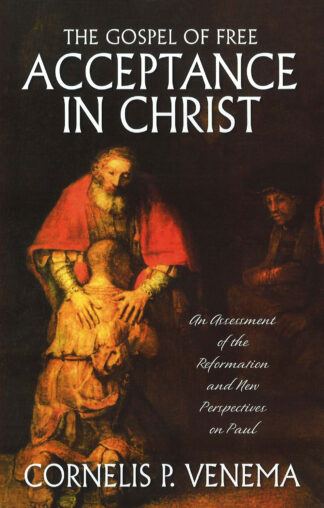
The Gospel of Free Acceptance in Christ
An Assessment of the Reformation and the New Perspective on Paul
Description
Question: Is it any surprise to you that there is currently controversy in Reformed and Evangelical circles over the doctrine of justification, or did you see it coming? Rev. Roberts: I was rather slow in realizing the danger, probably because I ministered in a somewhat remote situation. So I did not see it coming, alas. […]
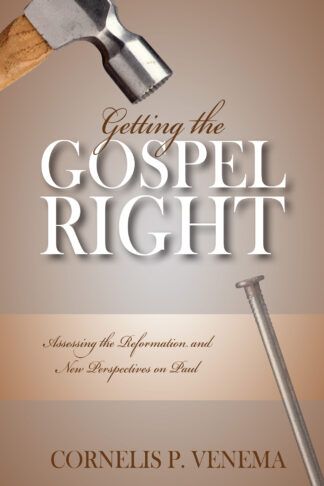
Getting the Gospel Right
Assessing the Reformation and New Perspectives on Paul
Description
Question: Is it any surprise to you that there is currently controversy in Reformed and Evangelical circles over the doctrine of justification, or did you see it coming? Rev. Roberts: I was rather slow in realizing the danger, probably because I ministered in a somewhat remote situation. So I did not see it coming, alas. […]
Latest Articles
The Works of Watson: Publisher’s Preface March 27, 2026
What follows is from the ‘Publisher’s Preface’ to our forthcoming five-volume edition of The Works of Thomas Watson. The Banner of Truth Trust was founded in 1957, and early in the following year the Trust published its first books. Thomas Watson’s Body of Divinity was one of them. At that time the book and its author […]
On the Trail of the Covenanters February 12, 2026
The first two episodes of The Covenanter Story are now available. In an article that first appeared in the February edition of the Banner magazine, Joshua Kellard relates why the witness of the Scottish Covenanters is worthy of the earnest attention of evangelical Christians today. In late November of last year, on the hills above […]