
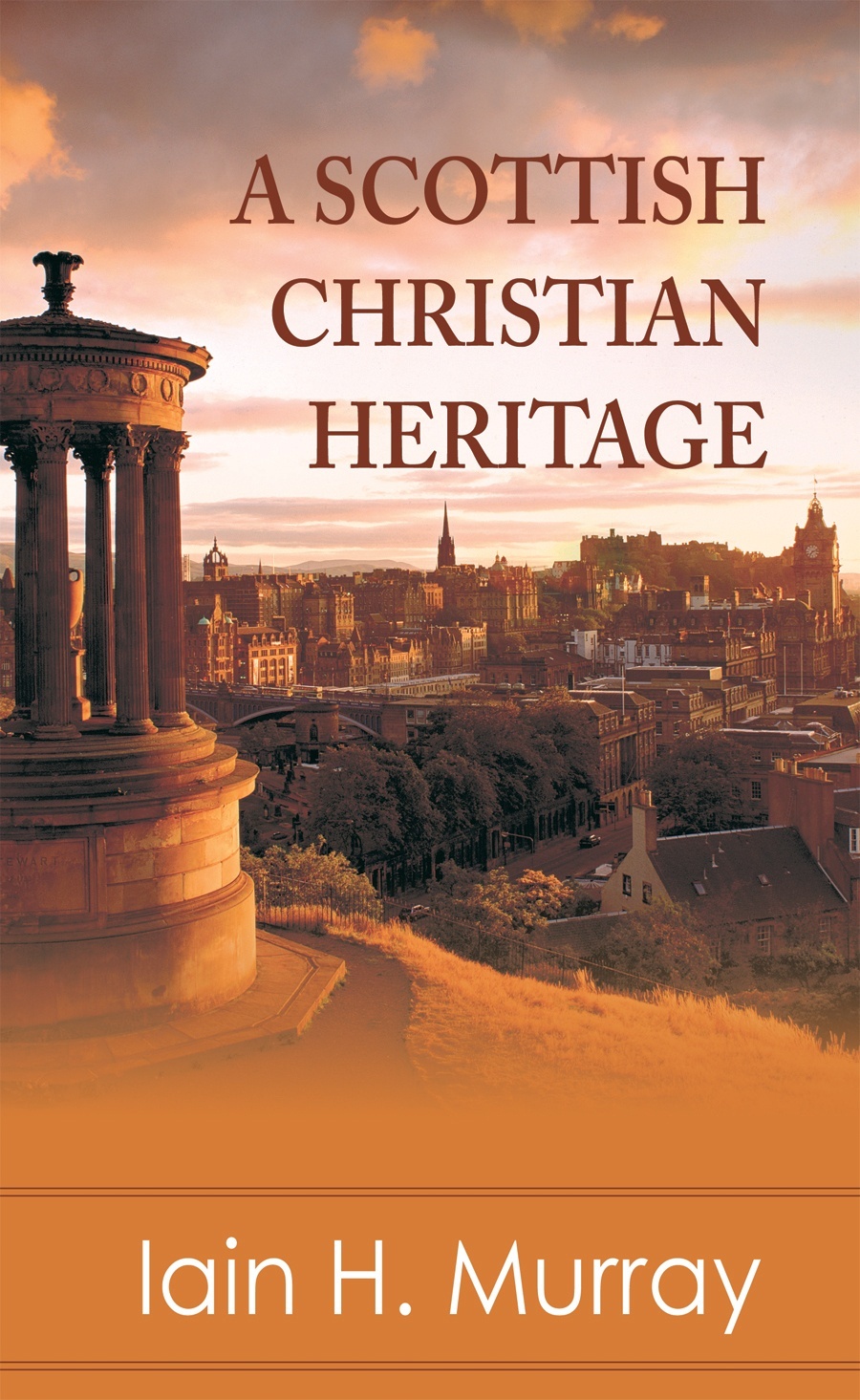
A Scottish Christian Heritage
46 in stock
| Weight | 1.3 lbs |
|---|---|
| Dimensions | 8.8 × 5.75 × 1.1 in |
| ISBN | 9780851519302 |
| Binding | Cloth-bound |
| Topic | General History, Missionary Biography, General Biography |
| Original Pub Date | 2006 |
| Banner Pub Date | Jun 1, 2006 |
| Page Count | 416 |
| Format | Book |
ENDORSEMENT
‘As various recent publications have indicated, Scotland exercised an influence on world history out of all proportion to its size. But the real reason for this has been obscured. It will be found here, however. And in the discovery of it the reader will be introduced to a wealth of little-known literature that is a vital part of the inheritance of the whole Christian church.’ — SINCLAIR B. FERGUSON
‘(Iain)…as he typically does, brings out good lessons for Christians in all places, in all times…you not only get an encouraging short biography, but you get really important, true lessons about Gospel ministry in the local church.’ — MARK DEVER
Book Description
In his book, A Scottish Christian Heritage, Iain Murray describes how for 300 years the school of evangelical Christianity changed Scotland as a nation. Passing on the evangel of the Reformation, and growing stronger in persecution, it turned a people to the Bible, and finally gave many of its best sons and daughters to the ends of the earth. For fidelity, joyful perseverance in hardship, and improbably advance, the record remains a witness to the faith that overcomes the world.
The compelling interest of this account lies in the way it draws on contemporary records-many of these Christian leaders being authors as well as men of action. Murray’s narrative explores this rich heritage and underlines its remarkable relevance for our own day. While not a Scottish church history, this is a gripping introduction to the many glorious successes, and some of the painful failures of the church, from the days of John Knox to those of Horatius Bonar. Explaining this panoramic tapestry are the words of Knox’s own commentary, ‘God gave his Holy Spirit to simple men in great abundance’.
Review
Table of Contents Expand ↓
| Foreword | ix | |
| Part One: Biography | ||
| 1 | John Knox and ‘the Battle’ | 3 |
| 2 | Robert Bruce: Standing Fast in Dark Days | 37 |
| 3 | Thomas Chalmers and the Revival of the Church | 73 |
| 4 | John Macdonald and the Awakening in the North | 123 |
| 5 | Horatius Bonar and the Love of God in Evangelism | 157 |
| Part two: missionary | ||
| 6 | The Missionary Spirit and the New Hebrides | 215 |
| 7 | Robert Moffat ‘Africanus’ | 241 |
| 8 | The Churches and Christian Unity in Scottish Church History | 277 |
| 9 | Scottish Preaching | 311 |
| 10 | The Problem of the ‘Elders’ | 339 |
| Part three: church issues | ||
| 11 | The Tragedy of the Free Church of Scotland | 367 |
| Index of Persons and Authors | 397 |
Related products
price
Original price was: $18.00.$16.20Current price is: $16.20.
Description
Murray explores Scotland’s rich Christian heritage and underlines its remarkable relevance for our own day. While not a Scottish Church history, A Scottish Christian Heritage is a gripping introduction to the many glorious successes, and some of the painful failures of the church, from the days of John Knox to those of Horatius Bonar. 416pp.
price
From: $13.00
Description
Murray explores Scotland’s rich Christian heritage and underlines its remarkable relevance for our own day. While not a Scottish Church history, A Scottish Christian Heritage is a gripping introduction to the many glorious successes, and some of the painful failures of the church, from the days of John Knox to those of Horatius Bonar. 416pp.
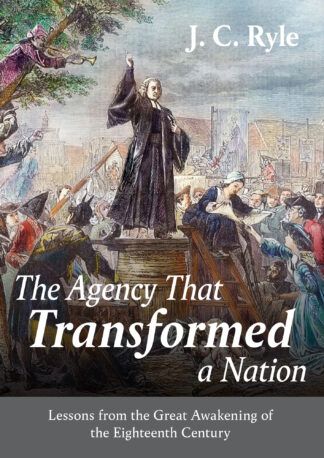
The Agency that Transformed a Nation
Lessons from the Great Awakening of the 18th Century
price
From: $1.20
Description
Murray explores Scotland’s rich Christian heritage and underlines its remarkable relevance for our own day. While not a Scottish Church history, A Scottish Christian Heritage is a gripping introduction to the many glorious successes, and some of the painful failures of the church, from the days of John Knox to those of Horatius Bonar. 416pp.
Adam –
This is a wonderful book! I was not sure, at first, whether this book would be able to hold my attention, but Murray proves that Scottish theologians and missionaries have much encouragement to offer by their biographies. Each chapter runs through an overview of the life of a Scottish theologian or missionary and then moves on to give wonderfully concise and helpful lessons we can learn from their life and teaching. There are beautiful excerpts from each person’s works, and Murray has only picked the best. I would actually place this in my top ten favorite books – and my markings in it are a good testimony to that!
Robert Norman –
Having grown up in Scotland (native to England) and beginning my walk with the Lord in Scotland I was delighted to be given this book. Upon reading it I was struck by just how the nation of Scotland has been served by great men in the past. It is my hope that this book will inspire more men to stand on the truth of God’s word today. May we take a stand for God’s word, never compromising, just like those who went before us in this nation that has known so much blessing from the Lord.
jlwaters –
Iain Murray provides an excellent look into the progress of biblical Christianity in Scotland from the time of Knox to the (aptly-titled) “Tragedy of the Free Church”. There is much to ponder in this book – its biographies offer lucid instruction, godly encouragement, and they are certainly used by God to stir conviction (at least, this was my own experience whilst reading); its historical treatment of Scotland and the World Missions Movement moves one to examine his commitment to bring the light of the gospel not only to his congregation every Lord’s Day, but also to the ends of the earth; its assessment of prominent issues in the church life of Scotland are incredibly clear, deserving of contemplation, and relevant to every pastor and church member in God’s church today! I highly recommend this wonderful volume!
Marc Daniel Rivera (KristiyaKnow) –
A Scottish Christian Heritage by Iain H. Murray is a powerful reminder that nations are shaped by what they believe. Published in a beautiful clothbound edition by Banner of Truth, this volume traces three hundred years of evangelical Christianity in Scotland. It shows how the recovery of biblical truth at the Reformation, strengthened through suffering and persecution, transformed a people and sent many of their sons and daughters across the world with the gospel.
This review could hardly be more timely. Banner of Truth has recently released a four-part video series, The Covenanter Story, revisiting the witness of the seventeenth-century Scottish Covenanters. These were believers who insisted on the kingship of Christ over his church and conscience, and for that conviction they suffered deeply under the Stuart monarchs who claimed authority over both state and Kirk.
This is not a full history of the Scottish church. Murray makes that clear. Instead, he offers a series of carefully chosen studies—biographical, missionary, and ecclesiastical—that together form a panoramic view. Drawing heavily from contemporary writings, letters, and sermons, he lets the voices of the past speak for themselves. Many of the leaders he profiles were not only preachers but authors. Their printed works shaped generations. Books were treasured, handed down, and treated as a sacred trust. Murray believes that recovering this literature is part of recovering spiritual vitality itself.
Part One: Biography
The first section centers on key figures who defined Scotland’s evangelical heritage.
It begins with John Knox and “the battle” of the Reformation. Murray walks through Knox’s early years, his preparation, the fierce conflicts of 1559–72, and the personal character of the man himself. We see both success and strain. Knox was bold, direct, and unafraid of opposition. Yet Murray is careful to draw lessons rather than merely praise him. The emphasis falls on the abundance of the Holy Spirit given to ordinary men who trusted God’s Word.
Next comes Robert Bruce, a nobleman turned preacher who stood firm in dark days. His ministry was marked by brief favor and long seasons of opposition. Exile did not silence him; it deepened his usefulness. Murray highlights Bruce’s perseverance under persecution and the spiritual depth that made him describe himself as profoundly blessed even in hardship. These are not romantic portraits. They are realistic accounts of costly faithfulness.
The section continues with Thomas Chalmers and the revival of the church. Murray explains why Chalmers still matters. He was not only a preacher but a leader who prepared the next generation and saw a fresh movement of the Spirit of God. His closing years reveal both achievement and unfinished hopes. Then we move north with John MacDonald and the awakening in the Highlands and islands—Lochcarron, Ferintosh, even St Kilda. Lives were changed.
The gospel spread to India through his son. Finally, Horatius Bonar appears, known for the love of God in evangelism, ministering from Leith to Kelso and later Edinburgh, navigating controversies without losing warmth in preaching Christ.
Part Two: Missionary
The second part widens the lens. Scotland did not keep its faith to itself.
Murray traces the rise of the missionary spirit, rooted in confidence in divine revelation. The New Hebrides mission serves as a vivid example. On islands like Aneityum—called “the Antioch of the Pacific”—the gospel took root in unlikely soil. The narrative shows that missionary work flowed naturally from a church saturated in Scripture.
The chapter on Robert Moffat, “Africanus,” brings us to southern Africa. Through journals and reports, we glimpse hardship, danger, and steady proclamation. Murray does not exaggerate success. He shows struggle, slow progress, and enduring conviction. The missionary movement was not driven by romance but by belief in the truth and authority of God’s Word.
Part Three: Church Issues
The final section addresses church life and its internal tensions.
Murray examines debates about Christian unity, the idea of a single visible national church, and why certain arguments failed. He points out misplaced priorities and flawed deductions without turning the book into a denominational defense. Presbyterian leaders appear often, but the strength of Scottish Christianity, he argues, lay more in shared evangelical convictions than in distinctives alone.
There are chapters on Scottish preaching—its form, its expository character, its pastoral tone, and especially its content. Sermons aimed at the conscience. They were rich in Scripture and serious about eternity. A chapter on the problem of elders wrestles with church government and the rule of Scripture. Finally, “The Tragedy of the Free Church of Scotland” tells of theological change in the late nineteenth century. As reverence for biblical authority weakened, so did the spiritual power of the church’s literature. Reading habits shifted. Fiction replaced theology as the nation’s most influential voice. Murray’s warning is clear: faith in God cannot survive long where confidence in his Word fades.
Why This Book Matters
One of the book’s great strengths is its use of primary sources. Murray relies on diaries, sermons, and firsthand records. This keeps the narrative grounded. Murray also acknowledges failures and internal conflicts alongside successes. The result is honest history. It invites readers not only to admire the past but to learn from it. Murray does not argue that Scotland was uniquely holy. He explicitly denies any natural link between nation and faith. What made the difference was recovered biblical truth, persecution that refined conviction, and literature that shaped minds and hearts. Overall, A Scottish Christian Heritage is about people and movements, and the lasting power of Scripture.