
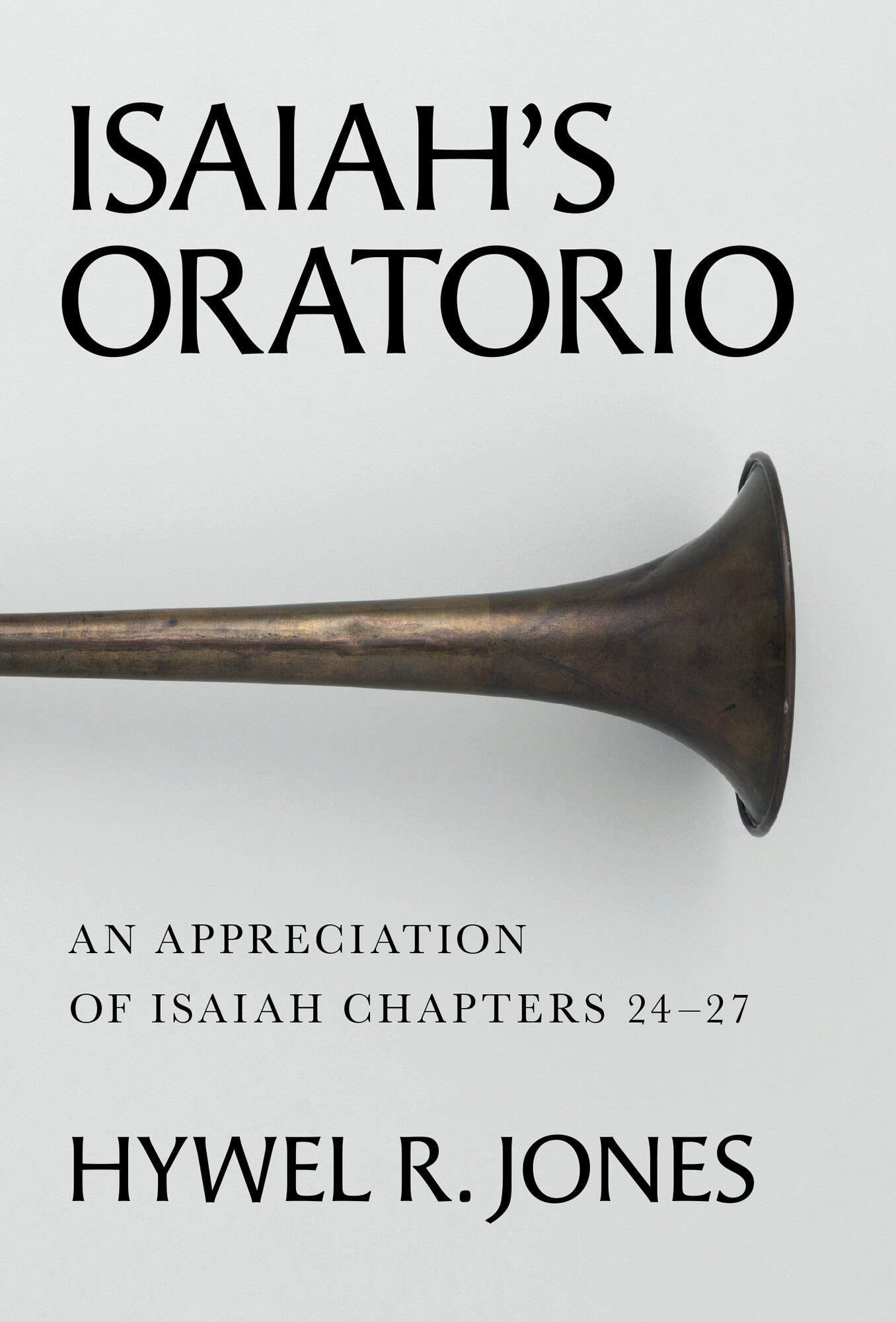
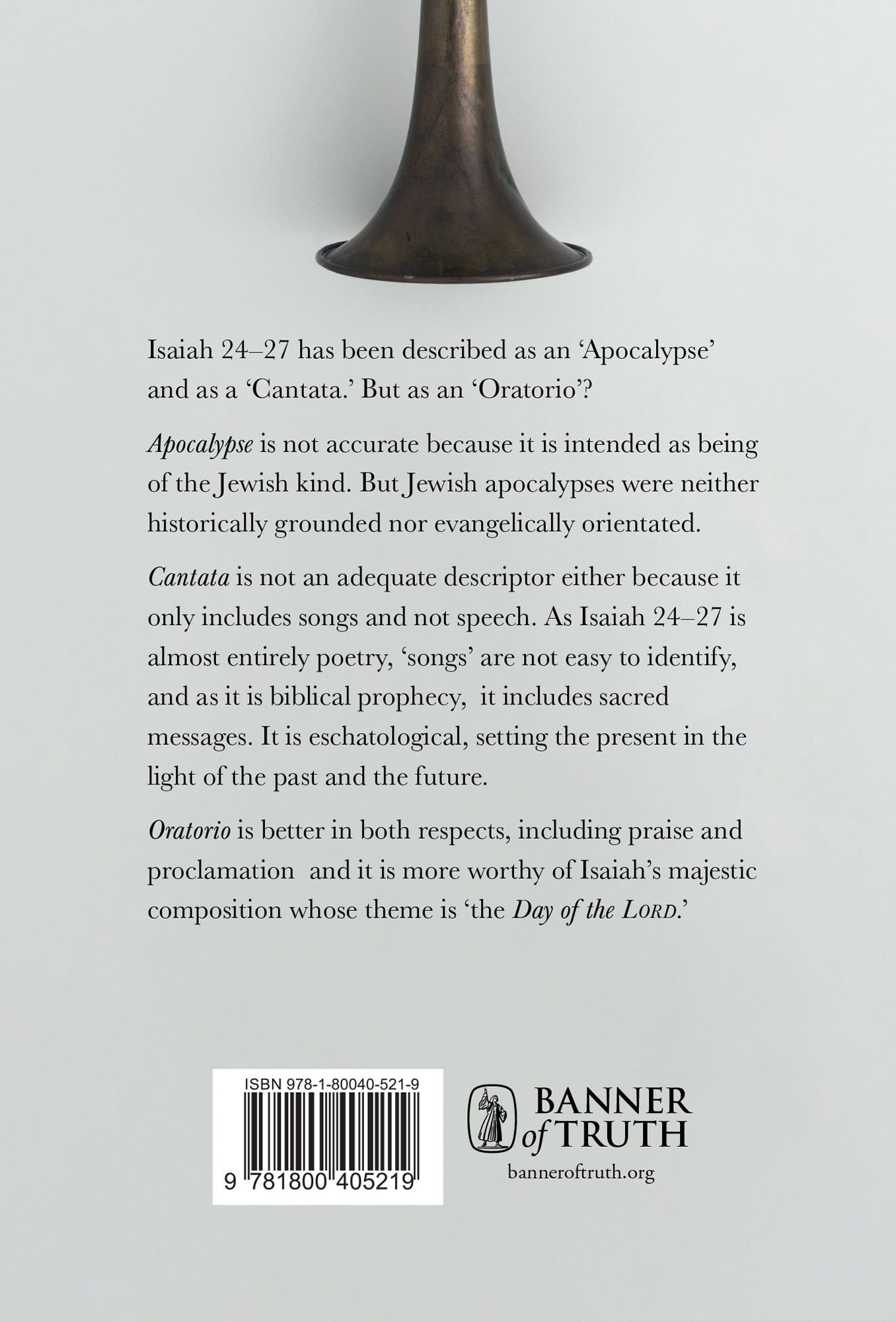


Isaiah’s Oratorio
An Appreciation of Isaiah Chapters 24-27
| Weight | .5 lbs |
|---|---|
| Dimensions | 5 × .5 × 7.5 in |
| ISBN | 9781800405219 |
| Binding | Cloth-bound, eBook (ePub & Mobi), Cloth-bound & eBook (ePub & Mobi) |
| Topic | Commentary, Prophecy |
| Page Count | 182 |
| Format | Book |
| Subtitle | An Appreciation of Isaiah Chapters 24-27 |
| The Author | Jones, Hywel R. |
Chapters 24–27 of Isaiah have been described as his ‘Tale of Two Cities.’ Like Charles Dickens’ well-known novel, they speak of a terrifying urban convulsion which has widespread reverberations. But the difference between them is of course far greater than any similarity.
Dickens recorded the ‘Terror’ of the French Revolution that sent shock waves from Paris to London (and across Europe to the New World) to which he could only append the desirable possibility of a ‘resurrection-like’ renewal. Isaiah’s ‘two cities’ are an anticipation of ‘Babylon’ and the ‘New Jerusalem’ in John’s Apocalypse, and what he says about each is certain and everlasting.
The events of which Isaiah speaks take place ‘in [or] on that day.’ This is a recurring expression in chapters 24–27 of his prophecy. They refer to ‘the Day of the Lord’ and introduce acts of the Lord’s judgment and salvation. Following the text, these will be considered in seven sections or ‘movements’ with 24:1-20 providing a kind of ‘overture’ to the whole since it deals with both those realities.
Isaiah 24–27 is a magnificent display of ‘the Day of the Lord’ in judgment and salvation, and also of godly rejoicing and waiting for it in dark days. It comports with ‘the already and not yet’ of Christian living, and so Christians should find strength and comfort in these chapters as they look forward and upward to the Lord’s return and ‘the new world’ that God has promised.
Table of Contents Expand ↓
| Foreword | vii | |
| 1. | Dividing the Book of Isaiah | 1 |
| 2. | Describing Isaiah 24–27 | 7 |
| 3. | Expounding Isaiah’s Oratorio: Chapter 24–27 | 33 |
| Appendices | ||
| 1. | A Detailed Outline of Isaiah 26:1–21, J. Alec Motyer | 149 |
| 2. | ‘The Destruction of Sennacherib’ by Lord Byron | 151 |
| 3. | Herman Witsius, ‘The Benefits of the New Testament’ in The Economy of the Covenants between God and Man (Book 4, Chapter XV, Points XX–XXXVII.) | 153 |
| Bibliography | 169 |
Related products
Commentary on the Psalms
Abridged
price
Original price was: $35.00.$31.50Current price is: $31.50.
Description
Chapters 24–27 of Isaiah have been described as his ‘Tale of Two Cities.’ Like Charles Dickens’ well-known novel, they speak of a terrifying urban convulsion which has widespread reverberations. But the difference between them is of course far greater than any similarity. Dickens recorded the ‘Terror’ of the French Revolution that sent shock waves from […]
price
Original price was: $30.00.$27.00Current price is: $27.00.
Description
Chapters 24–27 of Isaiah have been described as his ‘Tale of Two Cities.’ Like Charles Dickens’ well-known novel, they speak of a terrifying urban convulsion which has widespread reverberations. But the difference between them is of course far greater than any similarity. Dickens recorded the ‘Terror’ of the French Revolution that sent shock waves from […]
price
Original price was: $39.00.$35.10Current price is: $35.10.
Description
Chapters 24–27 of Isaiah have been described as his ‘Tale of Two Cities.’ Like Charles Dickens’ well-known novel, they speak of a terrifying urban convulsion which has widespread reverberations. But the difference between them is of course far greater than any similarity. Dickens recorded the ‘Terror’ of the French Revolution that sent shock waves from […]
Marc Daniel Rivera (KristiyaKnow) –
In Isaiah’s Oratorio, Hywel R. Jones turns his attention to a short, often-overlooked section of the book: chapters 24–27. Many readers rush past these chapters on the way to Isaiah’s better-known passages, but Jones argues that they deserve their own place in the church’s reading, worship, and preaching.
Jones’s goal is simple: help ordinary Christians see the weight and beauty of a part of Isaiah that is sometimes treated as mysterious or technical. He describes these chapters as an “oratorio” — a term chosen deliberately. Instead of framing them as an apocalypse full of puzzles, he presents them as a structured, musical-like work made of movements, themes, and responses. It’s a fresh angle that brings clarity.
That approach pays off. Isaiah 24–27 deals with the Lord’s final judgment and salvation — the fall of the “city of man” and the joy of God’s true people. Jones shows how these chapters anticipate Revelation’s Babylon and New Jerusalem. But he keeps the tone calm and grounded. You never feel lost in symbolism or speculative connections. Instead, he highlights how Isaiah’s vision strengthens believers in the “already and not yet,” helping them wait faithfully for Christ’s return.
First, Jones explains why Isaiah 24–27 stands as a distinct, cohesive unit within the larger book. He isn’t dismissive of modern scholarship, but he is firm in arguing for the unity of Isaiah and clear in showing why these chapters belong together. His overview of how Isaiah’s speeches, historical narratives, and prophetic themes interlock is one of the book’s quiet strengths. It’s academic material presented in everyday English.
Second, he lays out the literary and theological features of these chapters. This is where his pastoral experience shows. He notes patterns, recurring phrases (“in that day”), and poetic structures, but he always brings the reader back to what these things mean for faith and hope.
Finally, the bulk of the book offers a movement-by-movement exposition of the text itself. Chapter 24 functions as an overture: both the terror of judgment and the promise of salvation appear in miniature. From there, each section unfolds like a musical line building on the last — lament, praise, waiting, assurance. Jones helps you hear the whole piece.
Jones writes with unusual clarity for a book on prophecy. The sentences are short. The arguments are steady. The tone is warm but never sentimental. His years of preaching show in the way he applies the text without forcing it. You can tell these chapters mattered to him before he ever decided to publish his study.
The book also includes helpful extras: a detailed outline from J. Alec Motyer, a poetic reflection by Lord Byron, and a long excerpt from Herman Witsius. These aren’t filler. They give historical breadth and theological depth without weighing down the main text.
Anyone studying Isaiah will surely benefit from this. But ordinary Christians looking for encouragement in uncertain times may be the ones who gain the most. Isaiah 24–27 deals honestly with judgment and upheaval, yet it keeps lifting the reader’s eyes toward the city God builds, the feast he prepares, and the future he secures. Jones captures that balance well.
Final thoughts:
Isaiah’s Oratorio succeeds because it brings clarity to a portion of Scripture many overlook. It highlights both the severity of God’s justice and the strength of his salvation, all while helping readers hear the steady, hopeful message Isaiah intended.