
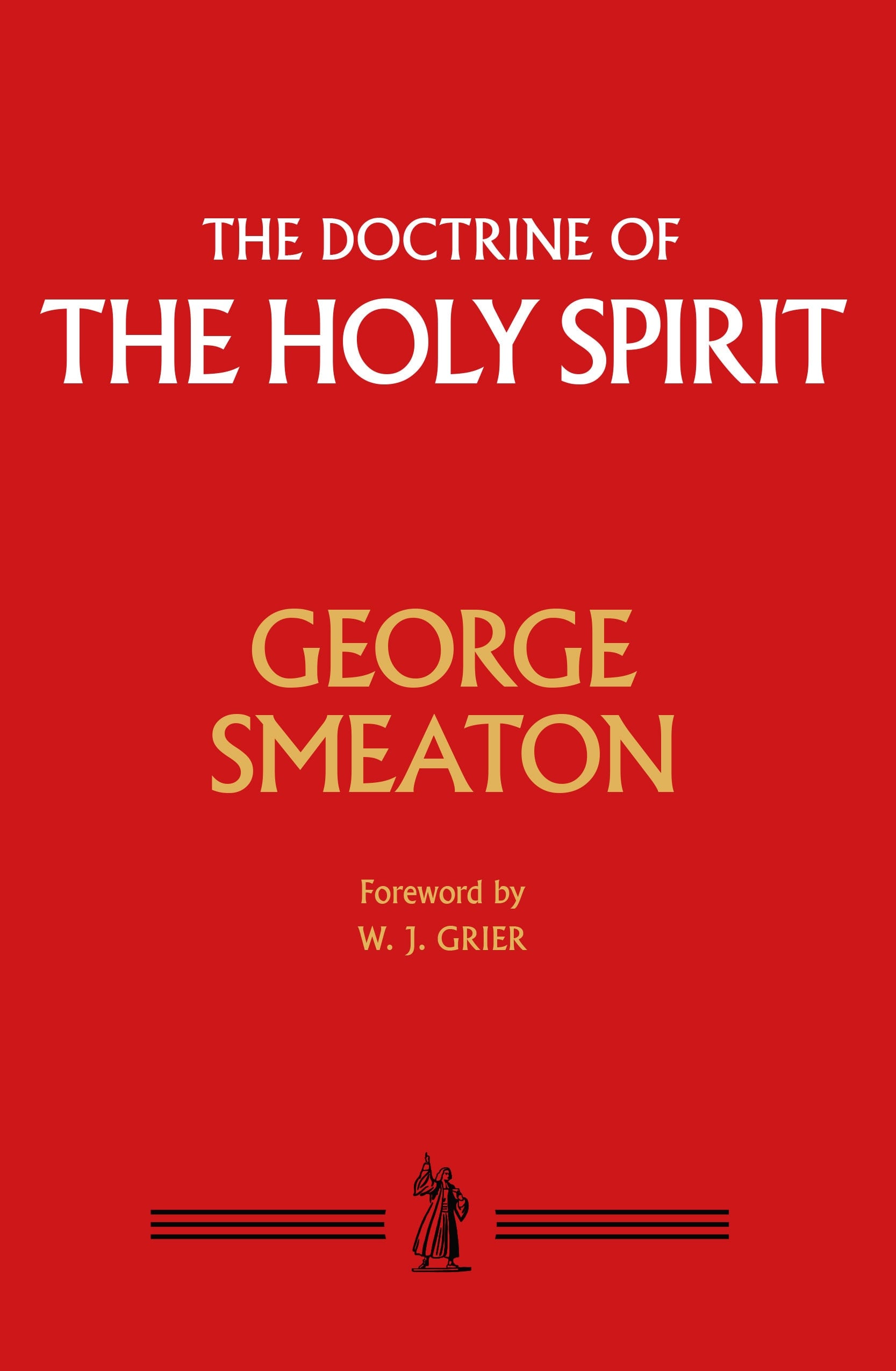
The Doctrine of the Holy Spirit
| Weight | 0.63 kg |
|---|---|
| Dimensions | 22.3 × 14.3 × 2.7 cm |
| ISBN | 9781848717046 |
| Binding | Cloth-bound, eBook (ePub & Mobi) |
| Format | Book |
| Page Count | 400 |
| Original Pub Date | 1882 |
| Banner Pub Date | Sep 21, 2016 |
Endorsements
‘Page after page glows with the ardour of a preacher who is enamoured of his theme … The truth is so real to his own experience that he cares little for unprofitable controversies.’– C.H. SPURGEON
‘Dr Smeaton was the master of a very clear and unobtrusive style of expression. … He was as modest and unassuming as he was thorough and painstaking. A man can take his word in regard to any theme that he handles as soon as that of any writer on theological subjects.’– PRINCIPAL JOHN MACLEOD
Book Description
‘Wherever Christianity has become a living power, the doctrine of the Holy Spirit has uniformly been regarded, equally with the atonement and justification by faith, as the article of the standing or falling church…’– GEORGE SMEATON
The Doctrine of the Holy Spirit formed the capstone of George Smeaton’s teaching.
Handling his subject under three divisions, Smeaton treats first the testimony to the Holy Spirit as it is progressively revealed in Scripture. Secondly, he gives detailed attention to six subjects: the personality and procession of the Holy Spirit; the work of the Spirit in the anointing of Christ; the work of the Spirit in connection with revelation and inspiration; the Spirit’s regenerating work in the individual; on the Spirit of holiness; and the work of the Holy Spirit in the church. Finally, there is a historical survey of the doctrine of the Holy Spirit from the Apostlic age.
Though considered by his colleague, James Macgregor, to possess ‘the best constituted theological intellect in Christendom’, Smeaton’s lucid style and earnest spiritual convictions make him valuable to all Christian readers.
Filled with the Spirit at Pentecost, he writes, ‘the timid became bold, the selfish self-denied, the arrogant humble’, and he characterizes as ‘mischievous and misleading’ the opinion that the church, having received the Paraclete, is no longer warranted to pray for effusions of transforming power today.
Table of Contents Expand ↓
| Foreword by W J Grier | vii | |
| Author’s Preface | ix | |
| First division | ||
| The Doctrine of the Trinity—Introductory Dissertation, briefly setting forth the Biblical Testimony in the Old and New Testament | 1 | |
| Second division | ||
| 1 | The Personality and Procession of the Holy Spirit | 91 |
| 2 | The Work of the Spirit in the Anointing of Christ | 111 |
| 3 | The Work of the Spirit in the Inspiration of Prophets and Apostles | 133 |
| 4 | The Spirit’s Regenerating Work on the Individual | 161 |
| 5 | On the Spirit of Holiness | 203 |
| 6 | The Work of the Holy Spirit in the Church | 239 |
| Third division | ||
| Historical Survey of the Doctrine of the Holy Spirit from the Apostolic Age | 269 | |
| Index to Texts Elucidated | 383 | |
| Index to Subjects and Writers | 387 |
Related products

price
£16.00
Description
In this invaluable study we find Smeaton’s sensitive theological acumen, his skill in judicious exposition, and his evident devotion to the person of Jesus Christ. Like its companion volume, The Apostles’ Doctrine of the Atonement, a work to be read and re-read. 520pp.
The Cross
The Pulpit of God's Love
price
£1.75
Description
Helps us to think through the message of the cross, and to appreciate God’s love and justice in the death of Christ. 48pp.
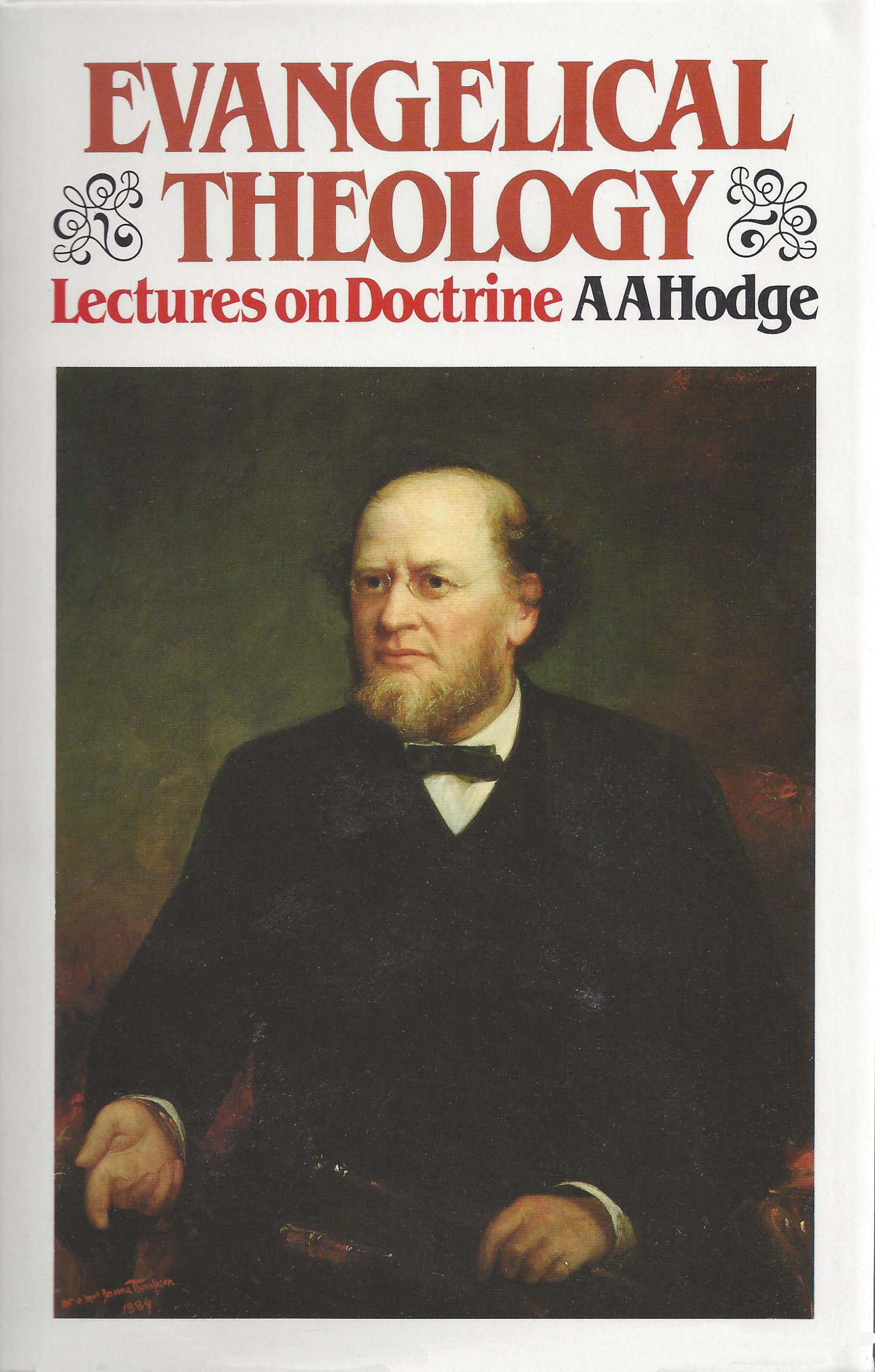
Evangelical Theology
Lectures on Doctrine
price
£12.00
Description
Within this volume readers will find ‘the learning of a scholar and the enthusiasm of a loving Christian’. Hodge gave his students ‘theology, exposition, demonstration, orthodoxy, learning, but giving all this to them warm.’ 456pp.
Marc Daniel Rivera (KristiyaKnow) –
George Smeaton’s The Doctrine of the Holy Spirit is a scholarly yet devotional treatment of one of the most often neglected doctrines in Christian theology. First published in 1882 and reissued by Banner of Truth in a beautifully bound and fully re-typeset 2016 edition, this volume is an essential contribution to pneumatology—the doctrine of the Holy Spirit—as it was historically understood and biblically grounded within the Reformed tradition.
Smeaton, a prominent theologian of the Free Church of Scotland and professor of Exegetics at New College, Edinburgh, presents this work as the culmination of a lifetime of theological study. He was highly esteemed by his contemporaries for his theological acumen and reverent approach, and this volume justifies that reputation.
Divided into three parts, the book begins with a thorough exegetical survey of the doctrine of the Holy Spirit in both the Old and New Testaments. Smeaton carefully traces the progressive unfolding of the Spirit’s identity and work from the earliest scriptural revelations to the dramatic outpouring at Pentecost. Far from treating the doctrine as peripheral, Smeaton asserts that “wherever Christianity has become a living power,” the Spirit’s role has been as central as justification by faith.
The second division forms the theological core of the book, where Smeaton explores six key themes with clarity and conviction. He begins with the personality and procession of the Holy Spirit, defending the traditional Trinitarian view against modern depersonalization. He then examines the Spirit’s anointing of Christ, revealing the deep relationship between the Second and Third Persons of the Trinity. The Spirit’s role in inspiration and revelation affirms the divine origin of Scripture, while His regenerating work in believers highlights the transformative power of salvation. Smeaton also addresses the Spirit of holiness, framing sanctification within a Trinitarian context, and concludes with the Spirit’s ongoing work in the church.
Smeaton warns against the “mischievous and misleading” notion that the church should no longer pray for fresh effusions of the Spirit. In doing so, he models a theology that is both intellectually robust and spiritually fervent.
The final division is a historical survey tracing the doctrine from the apostolic age through the patristic, medieval, and Reformation periods. This portion demonstrates Smeaton’s mastery of church history. His overview is particularly useful for readers who want to understand how doctrinal convictions about the Holy Spirit evolved and were defended over time.
The clarity and modesty of Smeaton’s style are worth noting. Though deeply learned, he avoids technical obscurity. His goal is not merely academic argumentation but the edification of the Church.
Final thoughts:
George Smeaton’s The Doctrine of the Holy Spirit is exceptional, and perhaps one of the best works I’ve read on the subject. Smeaton’s treatment is comprehensive yet accessible. If you want to deepen your understanding of the Holy Spirit’s work in redemptive history and personal experience, I highly recommend this volume!
Richard C Ross –
Isn’t it the case, with any of the writings of those men with penetrating spiritual perception, that statements of truth tumble over one another, not only proving to be deep insights into the subject immediately under discussion but truths pertinent to many other branches of Scripture knowledge and theological investigations?
In many cases the exegesis offered here differs from the conventional but rarely does the author fail to convince. In particular, I’d suggest pages 173ff illustrate the case in point; one notable instance among many in this valuable book; an instance which alone ought to persuade those unfamiliar with this book to ‘take and read’.
As with the contributions of all great expositors, George Smeaton’s comments offer an almost continuous flow of matter for sermons, coming to the reader with a sense of urgency which will burn into the heart of any preacher and make us wish we could preach that truth now!
Due to the age in which this book was written, there are many pages wasted on the present day reader: those (sometime far too long) sections dealing with individuals whose stars declined ages past and whose influence thankfully ran into the sands shortly afterwards. This redundancy also applies to by far the greater number of footnotes, which almost invariably refer either to inaccessible books or irrelevant individuals.
One sad lack is any discussion, or even recognition, of the doctrine of ‘definitive sanctification’. I found no reference to this truth, let alone development of the vital doctrine. While there is sound teaching on progressive sanctification, it will be impossible to cast that aspect of the Holy Spirit’s activity in the full light of Scripture without setting it beside its Biblical counterpart.
There are a few, though only a few, typesetting errors; an unfortunate example on page 253.
Inevitably, not every paragraph is of equal usefulness; whether (too frequently) on account of historical irrelevance or (rarely) on account of the questionable views Smeaton advocates. In this category, I would include the stingingly harsh criticism of what the author (twice) refers to as the ‘rash and presumptuous’ errors of the ‘Plymouth Brethren’. I have no particular interest in defending the ‘Plymouth Brethren’ but I object to the author summarily dismissing the views he castigates in this connection, while offering no Biblical justification for his position; relying (most untypically for this author) merely on what in effect is ‘tradition’. It cannot be a valid defence of his curt treatment to suggest that this matter does not deserve more space and attention, when the rejection of it is made with such vehemence.
In my opinion pages 256 – 267 offer by far the most valuable contribution of this undoubtedly imposing book – of course, nothing like these theologically aristocratic books are written today! What paupers we are! It seems all-too-often that present-day written theology is either ‘watered-down’ theological homeopathy or aridl, self-congratulatory ‘academic’, whose only purpose is to prove ‘I can do it too’! We might ‘stand on the shoulders’ of our highly esteemed forefathers in the faith – but it seem we do not! Pages 256-267 are the quintessence of the whole book; indispensable truths to be lodged in the heart of every preacher of the gospel. The doctrinal and biblical dynamic of the truths Smeaton propounds here have their existential evidence in the preaching of Whitefield, Edwards, Rowland, Williams, Lloyd-Jones and co. Oh, that every preacher would take these simple and simply vital principles deep into our hearts and minds.