
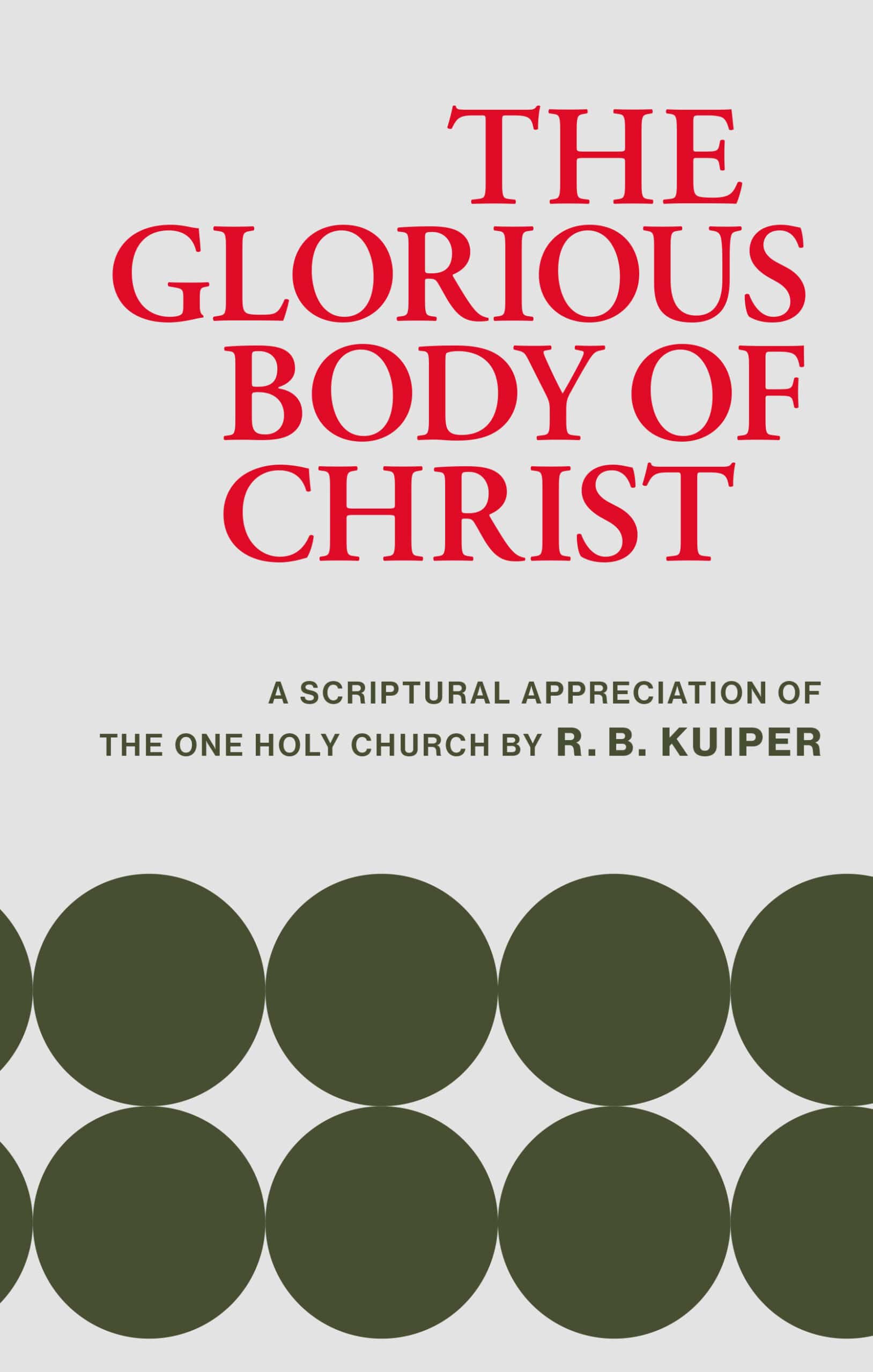

The Glorious Body Of Christ
A Scriptural Appreciation of the One Holy Church
| Weight | 0.608 kg |
|---|---|
| Dimensions | 22.22 × 14.28 × 2.54 cm |
| ISBN | 9781800404830 |
| Binding | Cloth-bound |
| Format | Book |
| Page Count | 416 |
| Scripture | New Testament |
| Banner Pub Date | Jun 1, 1967 |
| Original Pub Date | 1966 |
*New Retypeset Edition*
Book Description
‘Glorious’ is probably the last adjective most modern writers would use to describe the Christian Church. Yet R. B. Kuiper chose his title, The Glorious Body of Christ, advisedly, for he wished to emphasize what he believed to be a sadly neglected aspect of the subject, that the Church of Christ is glorious.
Dr. Kuiper, who died in 1966, was for many decades a teacher of theology, and his great concern was for the popular presentation of Christian doctrine. His own books went far to meet that need, including his God-Centred Evangelism (also published by the Trust) and For Whom Did Christ Die? on the extent of the atonement.
In addition to his vigorous and clear style, Kuiper is also noted for the comprehensive way in which he treats his subject. The Glorious Body contains no less than fifty-three chapters, and among the aspects of the subject dealt with are unity, the marks of the Church, the offices of the Church, its responsibilities and privileges, and the Church and the world.
Although this book is worthy of the widest possible circulation, it may be particularly commended as a manual for office-bearers in the Church.
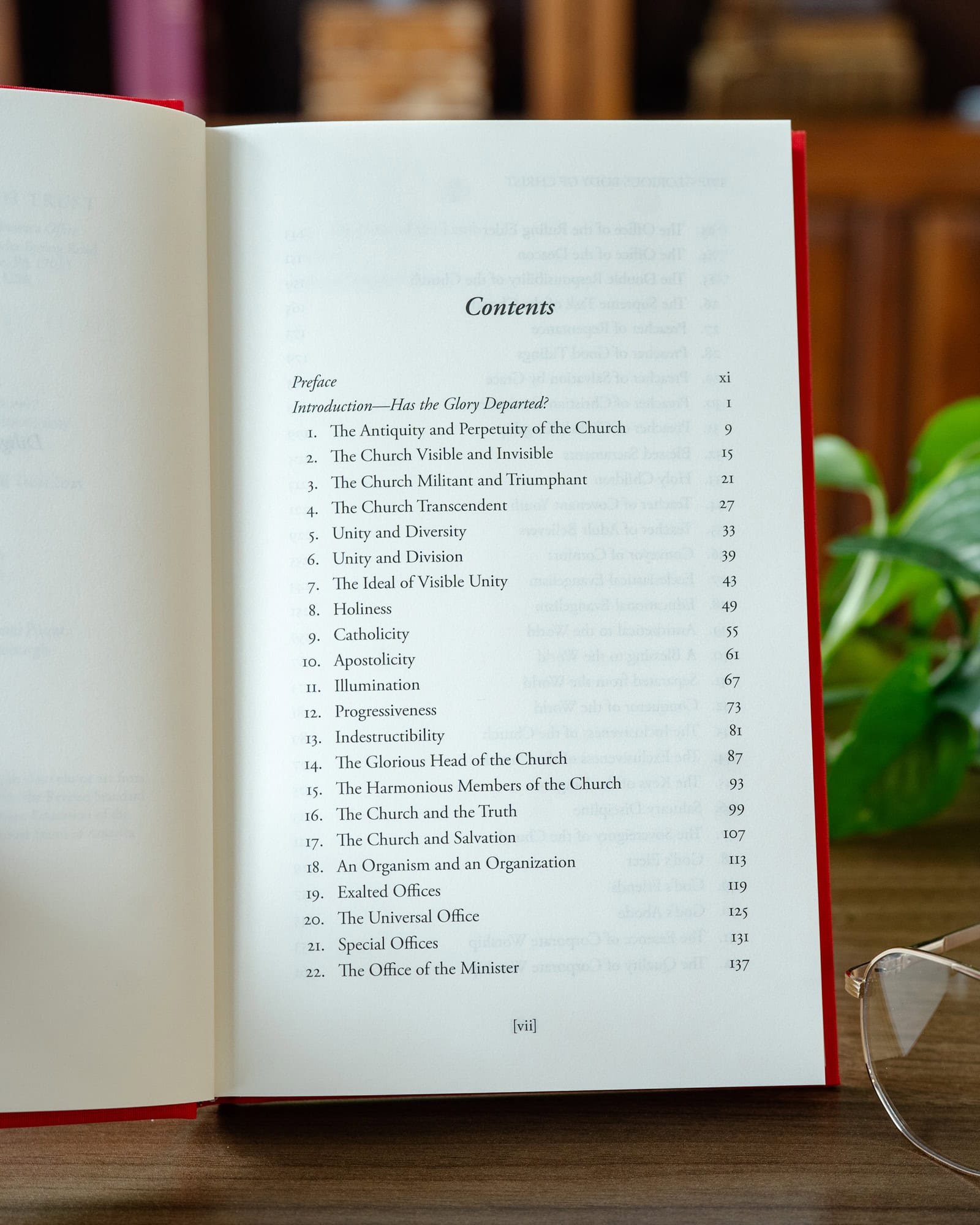
Table of Contents Expand ↓
| Preface | xi | |
| Introduction – HAS THE GLORY DEPARTED? | 1 | |
| 1. | THE ANTIQUITY AND PERPETUITY OF THE CHURCH | 9 |
| 2. | THE CHURCH VISIBLE AND INVISIBLE | 15 |
| 3. | THE CHURCH MILITANT AND TRIUMPHANT | 21 |
| 4. | THE CHURCH TRANSCENDENT | 27 |
| 5. | UNITY AND DIVERSITY | 33 |
| 6. | UNITY AND DIVISION | 39 |
| 7. | THE IDEAL OF VISIBLE UNITY | 43 |
| 8. | HOLINESS | 49 |
| 9. | CATHOLICITY | 55 |
| 10. | APOSTOLICITY | 61 |
| 11. | ILLUMINATION | 67 |
| 12. | PROGRESSIVENESS | 73 |
| 13. | INDESTRUCTIBILITY | 81 |
| 14. | THE GLORIOUS HEAD OF THE CHURCH | 87 |
| 15. | THE HARMONIOUS MEMBERS OF THE CHURCH | 93 |
| 16. | THE CHURCH AND THE TRUTH | 99 |
| 17. | THE CHURCH AND SALVATION | 107 |
| 18. | AN ORGANISM AND AN ORGANIZATION | 113 |
| 19. | EXALTED OFFICES | 119 |
| 20. | THE UNIVERSAL OFFICE | 125 |
| 21. | SPECIAL OFFICES | 131 |
| 22. | THE OFFICE OF THE MINISTER | 137 |
| 23. | THE OFFICE OF THE RULING ELDER | 143 |
| 24. | THE OFFICE OF THE DEACON | 151 |
| 25. | THE DOUBLE RESPONSIBILITY OF THE CHURCH | 159 |
| 26. | THE SUPREME TASK OF THE CHURCH | 165 |
| 27. | PREACHER OF REPENTANCE | 173 |
| 28. | PREACHER OF GOOD TIDINGS | 179 |
| 29. | PREACHER OF SALVATION BY GRACE | 185 |
| 30. | PREACHER OF CHRISTIAN GRATITUDE | 193 |
| 31. | PREACHER OF CHRIST’S KINGSHIP | 199 |
| 32. | BLESSED SACRAMENTS | 205 |
| 33. | HOLY CHILDREN | 213 |
| 34. | TEACHER OF COVENANT YOUTH | 221 |
| 35. | TEACHER OF ADULT BELIEVERS | 229 |
| 36. | CONVEYOR OF COMFORT | 235 |
| 37. | ECCLESIASTICAL EVANGELISM | 243 |
| 38. | EDUCATIONAL EVANGELISM | 251 |
| 39. | ANTITHETICAL TO THE WORLD | 259 |
| 40. | A BLESSING TO THE WORLD | 267 |
| 41. | SEPARATED FROM THE WORLD | 273 |
| 42. | CONQUEROR OF THE WORLD | 281 |
| 43. | THE INCLUSIVENESS OF THE CHURCH | 289 |
| 44. | THE EXCLUSIVENESS OF THE CHURCH | 297 |
| 45. | THE KEYS OF THE KINGDOM | 305 |
| 46. | SALUTARY DISCIPLINE | 313 |
| 47. | THE SOVEREIGNTY OF THE CHURCH | 321 |
| 48. | GOD’S ELECT | 329 |
| 49. | GOD’S FRIENDS | 337 |
| 50. | GOD’S ABODE | 345 |
| 51. | THE ESSENCE OF CORPORATE WORSHIP | 353 |
| 52. | THE QUALITY OF CORPORATE WORSHIP | 361 |
| 53. | THE BRIDE OF THE LAMB | 369 |
| Outline | 377 | |
| Index of Scripture Passages | 387 |
Related products
price
£12.00
Description
The church and her Antiquity and Perpetuity, Unity, Holiness, Apostolicity, Membership, Truth, Preaching, Evangelism, Worship, etc. 384pp.
Evangelicalism Divided
A Record of Crucial Change in the Years 1950 to 2000
price
£14.50
Description
The church and her Antiquity and Perpetuity, Unity, Holiness, Apostolicity, Membership, Truth, Preaching, Evangelism, Worship, etc. 384pp.
Preaching That Gets Through
God's Word and our words
price
From: £2.00
Description
The church and her Antiquity and Perpetuity, Unity, Holiness, Apostolicity, Membership, Truth, Preaching, Evangelism, Worship, etc. 384pp.
Marc Daniel Rivera (KristiyaKnow) –
At first glance, calling the modern Church “glorious” can feel unrealistic. Many people today see the Church as weak, divided, or compromised. That tension is exactly where R. B. Kuiper begins. The Glorious Body of Christ is his careful, Scripture-filled case that the Church is not only meant to be glorious in the future, but is glorious by its very nature because it belongs to Christ.
Kuiper spent decades teaching theology, especially to pastors and future church leaders. His goal was never academic showmanship. He wanted ordinary believers to understand what Scripture actually says. First published in 1966, this new 2025 edition is fully re-typeset and beautifully produced in Banner of Truth’s cloth-bound format.
What I love most about this book is Kuiper’s honesty. He does not deny the Church’s problems. In fact, he names them directly. In the introduction, he asks the blunt question: Has the glory departed? He looks at worldliness, doctrinal indifference, shallow growth, and confusion about the Church’s role. He argues that measuring success by numbers, buildings, or popularity is a mistake. Real glory, he insists, is spiritual. It is rooted in truth, holiness, and faithfulness to Christ.
From there, Kuiper builds patiently. The book contains fifty-three short chapters, each focused on a specific aspect of the Church. This structure makes the book easy to read in sections rather than all at once. You can tell the chapters began as articles, but that actually works in the reader’s favor. Each chapter stands on its own while contributing to a larger picture.
In the early chapters, he deals with the nature of the Church: its antiquity, its permanence, and the distinction between the visible and invisible Church. He explores unity and diversity, holiness, catholicity, and apostolicity. These are big theological ideas, but Kuiper explains them in plain language and constantly brings them back to Scripture.
Aside from this, I also like how balanced the book is. Kuiper refuses to choose between spiritual depth and practical structure. Later chapters describe the Church as both an organism and an organization. He takes church offices seriously and devotes careful attention to ministers, elders, and deacons. These sections explain not just what these offices are, but why they exist and how they serve the Church’s health.
Another strength of the book is its treatment of the Church’s responsibilities. Kuiper describes the Church as preacher of repentance, grace, gratitude, and Christ’s kingship. He also emphasizes teaching, discipline, worship, and evangelism. He does not pit evangelism against doctrine or worship against mission. Instead, he shows how all these belong together when the Church understands its calling.
The later chapters are especially rich. Kuiper discusses the Church’s relationship to the world, stressing that the Church must be distinct without becoming withdrawn. He explains both the inclusiveness and exclusiveness of the Church, refusing easy answers. The final chapters on corporate worship and the Church as the Bride of the Lamb bring the book to a fitting close. They remind the reader that the Church’s glory is not self-generated. It flows from Christ’s love and presence.
This book is unapologetically Reformed and deeply biblical. Kuiper quotes creeds and theologians when helpful, but Scripture clearly drives the argument. He writes with conviction that truth matters and that doctrinal clarity is not a luxury. That emphasis may feel uncomfortable to modern readers, but it is also one of the book’s greatest strengths.
Although Kuiper recommends the book especially for office-bearers, it is not limited to them. Any serious church member who wants a clearer, stronger view of the Church will benefit. This is not a trendy book. It does not chase current debates. Instead, it offers something more valuable: a steady reminder of what the Church is, why it exists, and why—despite all appearances—it remains glorious.
Final thoughts:
The Glorious Body of Christ succeeds because it lifts the reader’s eyes. It calls the Church back to Scripture, truth, and reverence for Christ. That message was needed in 1966. It is needed even more now.