
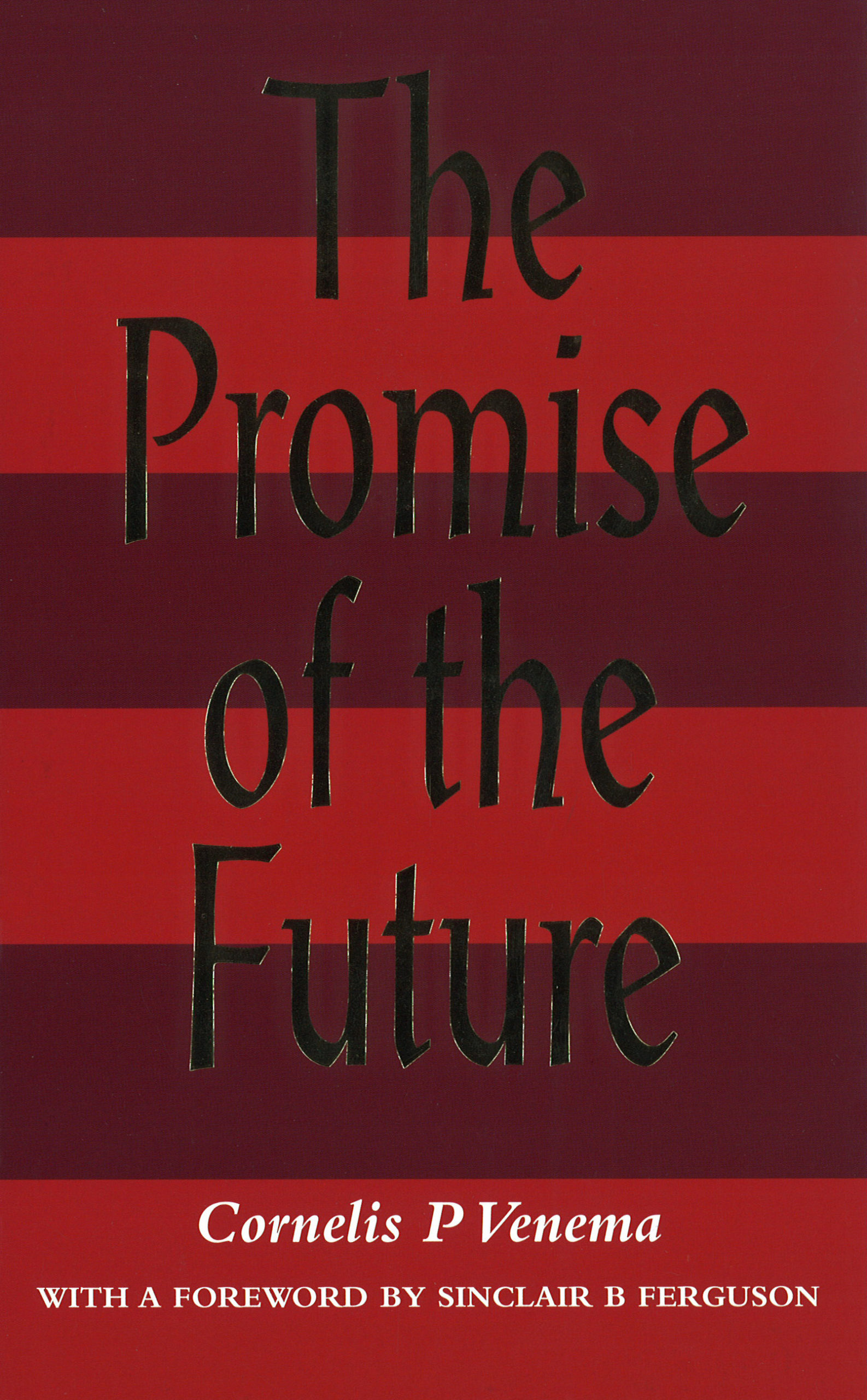


The Promise of the Future
| Weight | 0.81 kg |
|---|---|
| Dimensions | 22.3 × 14.3 × 3.6 cm |
| ISBN | 9780851517933 |
| Topic | The End Times |
| Format | Book |
| Original Pub Date | 2000 |
| Banner Pub Date | Nov 1, 2000 |
| Binding | Cloth-bound |
| Page Count | 560 |
| Scripture | Whole Bible |
Endorsement
‘I believe that you will find the study on which you are about to embark both intellectually satisfying and spiritually enriching. It will certainly inform you; more than that, it will help you to see what a glorious thing it is to be a Christian.’– SINCLAIR B. FERGUSON
Book Description
Though we can never, in our time-bound state, know the future in detail, God in his mercy has not left us in complete ignorance of what is to come. His revelation in Holy Scripture has cast a flood of light on what would otherwise remain an impenetrable mystery.
Even among those who accept the Bible’s authority, however, there has never been complete agreement on what Scripture teaches in this area.
This major new examination of biblical teaching on the future of the individual, of the church and of the universe as a whole will be useful both to theological students and to informed non-specialists. Ranging over the whole field, it interacts extensively with recent literature on disputed issues, such as the nature of the intermediate state, the millennium of Revelation 20 and the doctrine of eternal punishment, always seeking to answer the fundamental question: ‘What do the Scriptures clearly teach?’ The Christ centred nature of biblical teaching on the future is emphasized, as is the importance of the church’s historic confessions for an understanding of eschatology. The chief note sounded is one of hope: ‘God’s people eagerly await Christ’s return because it promises the completion of God’ work of redemption…The future is bright because it is full of promise, the promise of God’s Word.’
Table of Contents Expand ↓
| Foreword | ix | |
| Preface | xiii | |
| PART ONE: THE FUTURE IS NOW | ||
| 1. | Hope Nurtured by the Word | 3 |
| Staying within the Boundaries of God’s Word | 5 | |
| Christ, the Lord of History | 6 | |
| Paradise Lost, Paradise Regained | 9 | |
| A Living and Certain Hope | 10 | |
| 2. | The First Coming of the Lord | 12 |
| Preparing the Way in the Old Testament | 13 | |
| ‘In the Fullness of Time’ – the New Testament | 23 | |
| PART TWO: THE FUTURE BETWEEN DEATH AND RESURRECTION | ||
| 3. | The Intermediate State | 35 |
| Two Biblical Themes | 36 | |
| Unbiblical Views of the Intermediate State | 43 | |
| The Intermediate State in Scripture | 52 | |
| What about Purgatory? | 63 | |
| PART THREE: THE FUTURE OF CHRIST | ||
| 4. | The Second Coming of Christ | 79 |
| The Centrepiece of Biblical Expectation | 79 | |
| A Consummating Event | 87 | |
| Whose Time No One Knows | 95 | |
| PART FOUR: THE FUTURE MARKED BY THE ‘SIGNS OF THE TIMES’ | ||
| 5. | Signs of God’s Grace | 113 |
| Introducing the Signs of the Times | 113 | |
| Preaching to All the Nations | 120 | |
| The Salvation of All Israel | 127 | |
| 7. | Signs of Opposition and Judgement – I | 140 |
| General References | 141 | |
| Tribulation in the Olivet Discourse | 142 | |
| Some Observations about Tribulation | 146 | |
| The Great Tribulation | 150 | |
| Signs of Opposition and Judgement – II | 159 | |
| Apostasy | 160 | |
| The Antichrist | 167 | |
| Signs of God’s Judgement | 178 | |
| PART FIVE: THE FUTURE OF THE KINGDOM | ||
| 8. | Premillennial Views | 189 |
| Introducing the Millennial Views | 190 | |
| Historic Premillennialism | 194 | |
| Dispensational Premillennialism | 205 | |
| 9. | Postmillennial Views | |
| A Comment about Terminology | 219 | |
| A Brief Historical Overview | 221 | |
| The Main Features of Postmillennialism | 223 | |
| The Biblical Case for Postmillennialism | 229 | |
| Amillennialism | 233 | |
| 10. | Evaluating Premillennialism | |
| The Problem with Premillennialism | 245 | |
| Christ’s Return and the Rapture | 251 | |
| Israel and the Church | 261 | |
| The Hermeneutic of Literalism | 277 | |
| 11. | What About Revelation 20? | 296 |
| The Premillennialist Case | 298 | |
| The Millennium Is Now | 304 | |
| The Binding of Satan | 315 | |
| The Believer’s Reign with Christ | 327 | |
| 12. | Evaluating Postmillennialism | 340 |
| Defining Golden-Age Postmillennialism | 341 | |
| Two Qualifiers | 358 | |
| PART SIX: THE FUTURE OF ALL THINGS | ||
| 13. | The Resurrection of the Body | 363 |
| Biblical Themes regarding the Resurrection | 364 | |
| The Nature of the Resurrection Body | 370 | |
| The Resurrection/Renewal of All Things | 376 | |
| A Recent Debate | 378 | |
| Pastoral Questions regarding the Resurrection Body | 384 | |
| 14. | The Final Judgement | |
| Questions regarding the Final Judgement | 392 | |
| Degrees of Reward in the Kingdom of Heaven? | 405 | |
| 15. | The Doctrine of Eternal Punishment | 420 |
| The Problem of the Doctrine | 420 | |
| Answering the Objections | 428 | |
| 16. | The New Heavens and New Earth | 454 |
| All New Things? Or All Things Made New? | 456 | |
| Life in the Renewed Creation | 469 | |
| To Enjoy God Forever | 482 | |
| Selected Bibliography | 489 | |
| Glossary of Terms | 501 | |
| Index of Persons | 513 | |
| Index of Selected Subjects | 517 | |
| Index of Scripture References | 525 | |
| References to the Apocrypha | 538 |
You may also like…
Related products
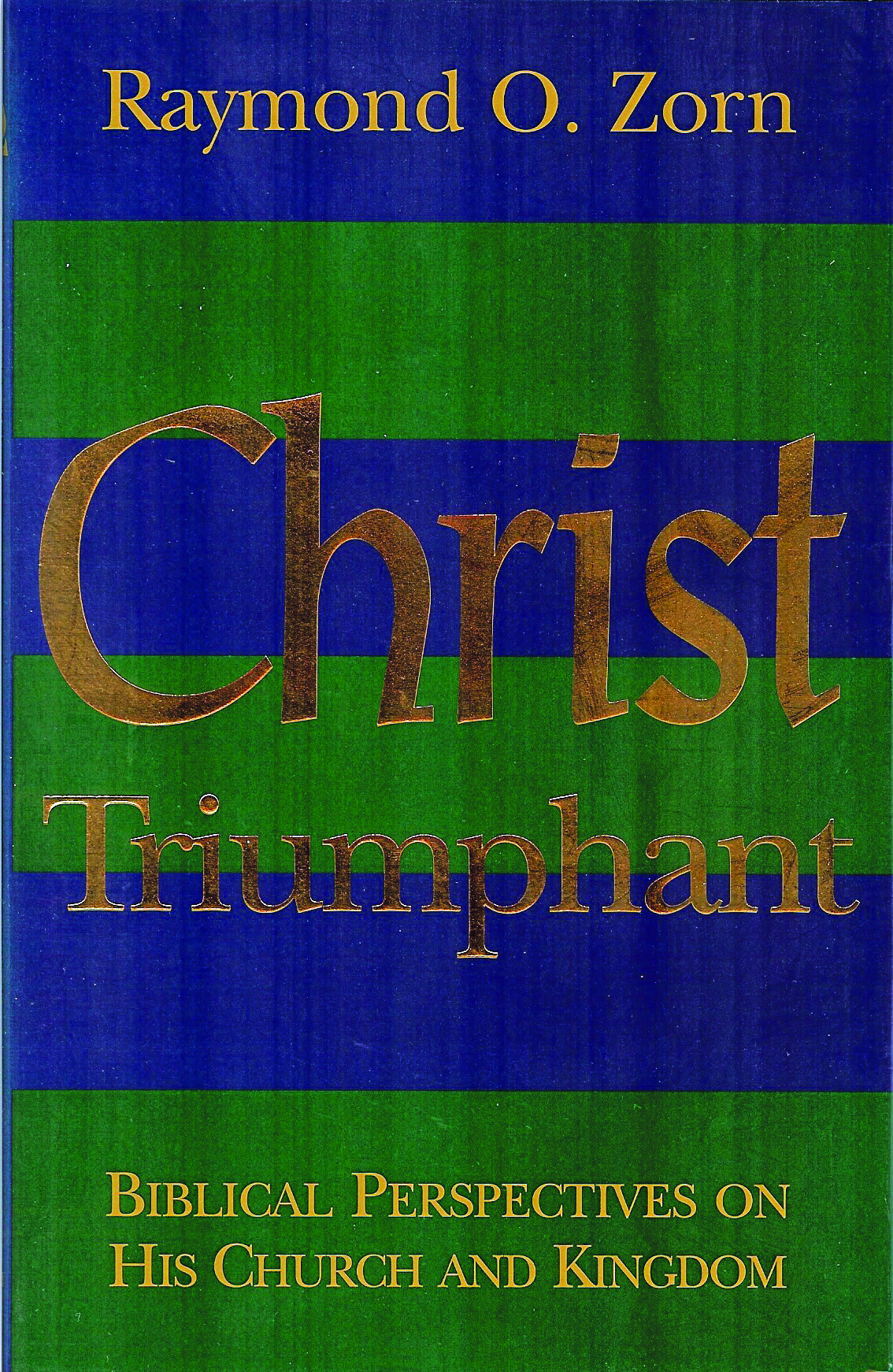
Christ Triumphant
Biblical Perspectives on His Church and Kingdom
price
£13.00
Description
The biblical teaching on the kingdom of God and its relationship to the church. 264pp.
price
From: £1.50
Description
Explains and defends the Bible’s teaching about the grace of God in the gospel. 32pp.
Marc Daniel Rivera (KristiyaKnow) –
Eschatology, the study of the last things, is one of the most debated areas in Christian theology. Even among those who fully accept the authority of Scripture, there are deep disagreements about how history will end. From my own leaning toward amillennialism, The Promise of the Future by Cornelis P. Venema stands out as a clear and steady guide. It avoids speculation and resists the urge to map out a detailed timeline. Instead, it keeps bringing the reader back to a more important question: what does the Bible actually and clearly teach?
Venema begins with a basic but often overlooked point: the future is not completely hidden. While we can’t know every detail, God has revealed enough in Scripture to give clarity and hope. The opening section grounds everything in God’s Word and in the person of Christ. The idea that history is under Christ’s rule is central. From the start, the book makes it clear that the Christian hope is not vague optimism—it is rooted in real events, especially the first coming of Christ, which already launched what the Bible calls the “last days.”
The book explains the tension between what is already true and what is still to come. Venema shows that the kingdom of God has already begun but has not yet reached its final form. This “already and not yet” framework helps make sense of many passages that can otherwise feel confusing. It also keeps readers from falling into extreme views that either ignore the present reality of Christ’s reign or act as if everything is still entirely future.
The middle sections of the book deal with topics that often raise difficult questions. For example, Venema carefully examines what happens between death and the final resurrection. He compares different views, including some that come from outside historic Christianity, and then walks through the biblical evidence in a clear and patient way. He also addresses ideas like purgatory and shows why they don’t fit with the overall teaching of Scripture. This part of the book is especially useful because it tackles real questions people have, not just abstract theology.
When the book turns to the second coming of Christ, it becomes even more focused. Venema presents Christ’s return as the central event that all of history is moving toward. He avoids speculation about dates or detailed sequences, emphasizing instead that Scripture calls believers to be ready, not to predict. This keeps the discussion grounded and practical.
A large portion of the book is devoted to the “signs of the times” and the different views about the millennium in Revelation 20. This is where many readers might expect things to get complicated, and in some ways they do. Venema interacts with premillennial and postmillennial views, explaining their strengths and weaknesses. However, he ultimately argues for an amillennial position. What stands out is the balance in his approach. He doesn’t dismiss other views quickly but takes the time to engage them seriously before offering his conclusions.
His discussion of Revelation 20 is especially important because that chapter is often at the center of debates. Venema argues that the “millennium” is not a future earthly kingdom in the way some believe, but a present reality tied to Christ’s current reign. Whether or not readers agree, they will at least come away with a clearer understanding of why this view has been widely held in Reformed theology.
The final section of the book brings everything together by looking at the ultimate future: the resurrection of the body, the final judgment, eternal punishment, and the new heavens and new earth. These chapters are some of the most encouraging in the book. Venema keeps pointing back to the promise that God will complete His work of redemption. The future is not just about endings—it is about renewal. The picture of a restored creation, where believers enjoy God forever, gives the book a strong and hopeful conclusion.
I thoroughly appreciate the clear progression of the book, moving from present hope to future fulfillment. Each section builds on the last, making it easier to follow a topic that can otherwise feel overwhelming. At the same time, the book interacts with a wide range of sources, including modern discussions and historic confessions, without becoming too technical for non-specialists.
Final thoughts:
Overall, this book is a careful and thoughtful study of what the Bible says about the future. It doesn’t try to settle every debate, but it does provide a solid framework for thinking about them. Its biggest advantage is its focus: instead of getting lost in speculation, it keeps pointing readers back to Scripture and to Christ.