
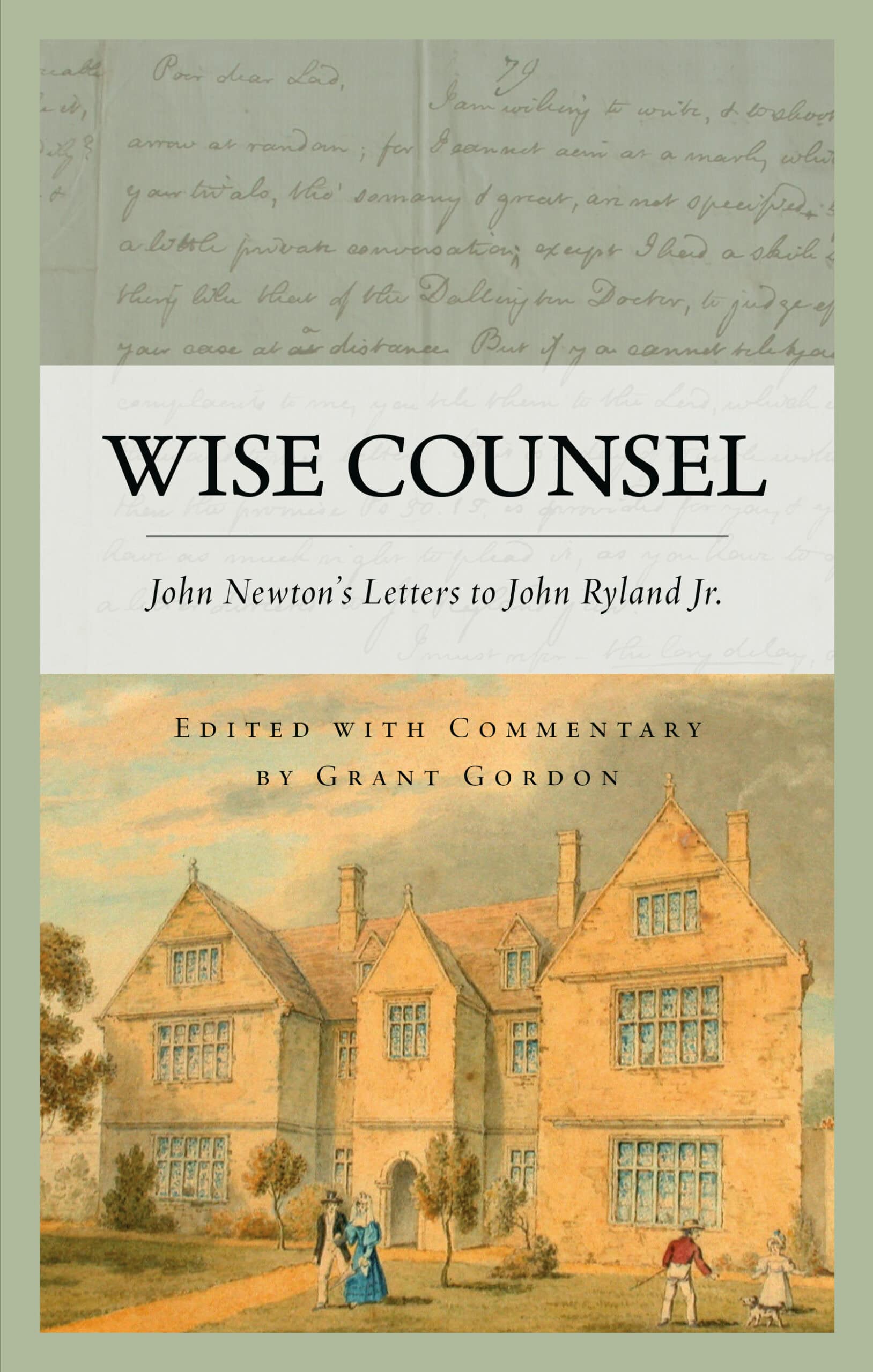
Wise Counsel
John Newton's Letters to John Ryland, Jr.
| Weight | 0.668 kg |
|---|---|
| Dimensions | 22.3 × 14.3 × 2.8 cm |
| ISBN | 9781800404144 |
| Binding | Cloth-bound |
| Format | Book |
| Page Count | 464 |
| Original Pub Date | 1780 (actually 2009) |
| Banner Pub Date | 2026 |
*New Edition With Added Material*
ENDORSEMENT
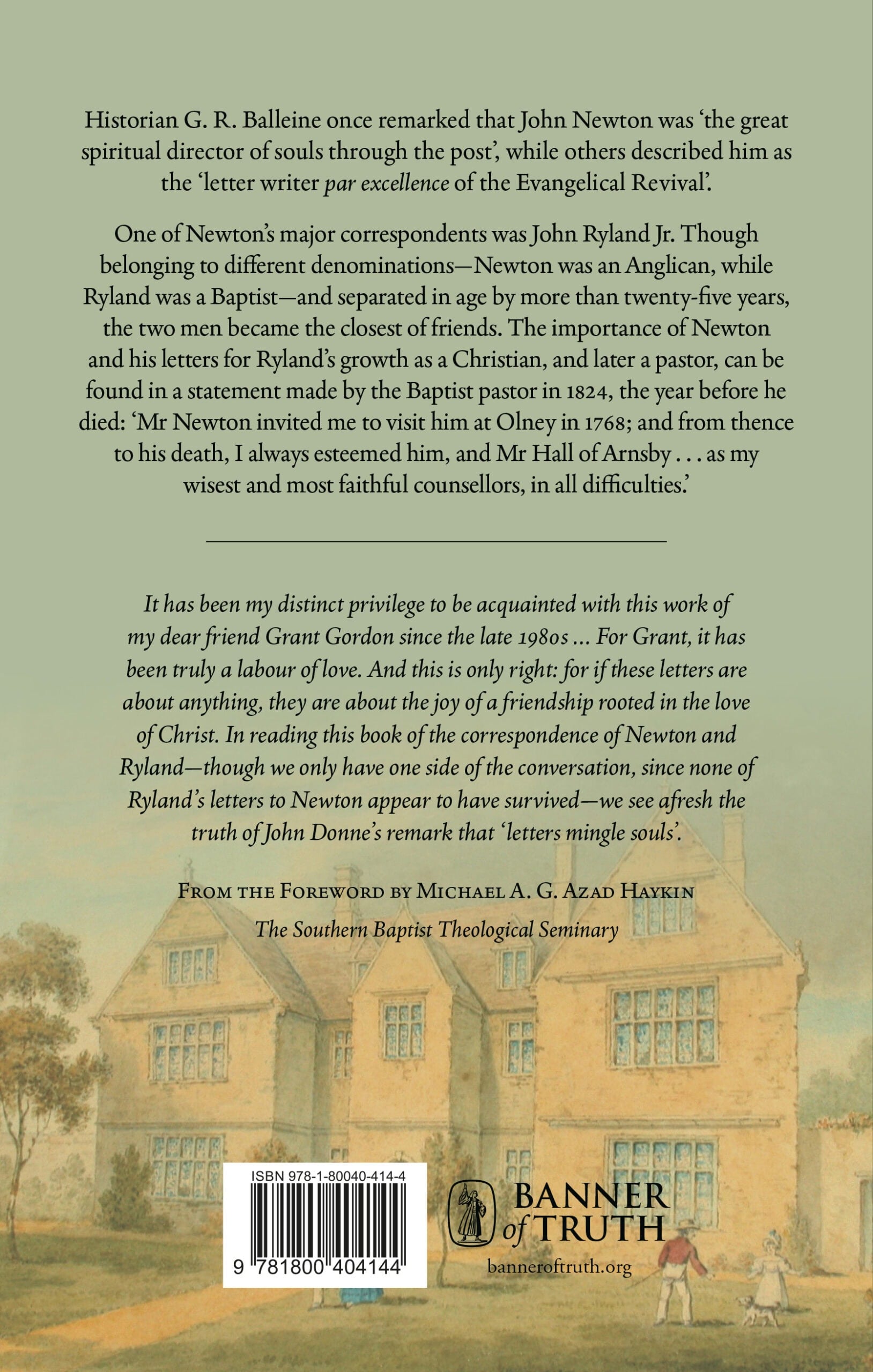
‘Some books are for tasting regularly, not reading through once. One such book is Wise Counsel. Newton was the former slave-trader turned pastor, and the author of Amazing Grace. The flavor of his ministry is such that frequent tastes are better than rare gulps.’ — JOHN PIPER
Book Description
John Newton (1725-1807) has rightly been called ‘the letter-writer par excellence of the Evangelical Revival’. Newton himself seems to have come to the conclusion, albeit reluctantly, that letter-writing was his greatest gift. In a letter to a friend he confessed, ‘I rather reckoned upon doing more good by some of my other works than by my ‘Letters’, which I wrote without study, or any public design; but the Lord said, ‘You shall be most useful by them,’ and I learned to say, ‘Thy will be done! Use me as Thou pleasest, only make me useful.’ Indeed, he wrote to his close friend William Bull that if the letters were ‘owned to comfort the afflicted, to quicken the careless, to confirm the wavering, I may rejoice in the honour He has done me’, and not envy the greatest writers of the age.
All but ten of the letters in the present volume have been brought out of undeserved obscurity by Dr Grant Gordon, whose researches in libraries and archives, as well as in little-known nineteenth-century periodicals, have uncovered much material which is certainly calculated to comfort, quicken, and confirm. Of those already in print, one letter is in volume 1 of the Trust’s six-volume edition of Newton’s Works, and nine more are in volume 2. Three of the nine are also in the Trust’s Letters of John Newton, edited by Josiah Bull. The rest should be new to almost all readers.
The particular recipient of Newton’s ‘wise counsel’ in this book was John Ryland, Jr. (1753-1825), Baptist pastor and educator, and close friend of Andrew Fuller, William Carey, and all the pioneers of the modern missionary movement. But in the background stand all the major figures of the eighteenth-century Evangelical Revival. A list of Newton’s friends and correspondents would, in fact, read like a ‘who’s who’ of the Revival. And forming the wider background is a very eventful period of history, from the American Revolution to the French Revolutionary Wars, by way of the colonization of Australia, the first missions to India, and the abolition of the slave trade. Dr Gordon has helpfully set the letters in the context of these events and provided useful background detail.
The reader will discover afresh in these letters, not only mature and wise counsel, but a wholesome emphasis on true Christian experience, a great breadth of Christian sympathy, and a strong confidence in the power of the grace of God, for, as Newton said, ‘Grace has long and strong arms!’
Table of Contents Expand ↓
| Foreword by Michael A. G. Haykin I | xi | |
| Preface and Acknowledgements | xiii | |
| Introduction–1: Overview of the Letters
Editor’s Note |
xvii
xxiii |
|
| Introduction–2: The Earlier Years of Newton and Ryland | xxv | |
| 1 | Ryland’s Poems – Justification – Humility | 1 |
| 2 | Justification – High Calvinism | 9 |
| 3 | Visit of Rowland Hill | 15 |
| 4 | Northampton – Advice on Preaching | 19 |
| 5 | Spiritual Experience – A Believer’s Frames | 23 |
| 6 | William Guy – Guidance | 31 |
| 7 | Henry Venn – Christ in the Vessel | 35 |
| 8 | Disappointments – Christian Unity | 39 |
| 9 | Betty Abraham – The Fellowship at Olney | 43 |
| 10 | Danger of Delusive ‘Impressions’ | 47 |
| 11 | Controversy with Arminianism – News of Friends | 53 |
| 12 | Blessings – Moravian Missions – Unity | 59 |
| 13 | Hopes for a Schoolboy – Inward Trials | 63 |
| 14 | Advice on Marriage | 67 |
| 15 | The King in His Beauty – Life as a Journey | 71 |
| 16 | American Revolution – Politics – Thankfulness | 77 |
| 17 | Spiritual Progress – The Soul a Besieged City | 83 |
| 18 | Marriage – Waiting on God – Submission | 87 |
| 19 | Disappointments – Providence – The Eternal View | 95 |
| 20 | Courtship – Possible Move from Olney | 99 |
| 21 | Courtship – A Call to Hull? | 103 |
| 22 | Smallpox – Inoculation – Providence | 107 |
| 23 | Overcoming Fear – Bereavement | 111 |
| 24 | New England Divines on a Work of Grace | 115 |
| 25 | Delays – Submission to the Will of God | 121 |
| 26 | Olney Hymns – Earthly Gloss Fades – Forms | 125 |
| 27 | Olney Hymns – America – Lawfulness of War | 129 |
| 28 | Ryland’s Marriage – Advice on the Married State | 135 |
| 29 | Married Life – Move to London – Letters | 141 |
| 30
30b |
Anecdotes – Cardiphonia – The Infallible Pilot
Sympathy – Providence |
147
153 |
| 31 | Trials – Cotton Mather – Simplicity in Preaching | 157 |
| 32 | Ryland, Sr. – Newton’s Apologia | 163 |
| 33 | Ryland’s Brother and Father – Comforts – Messiah | 167 |
| 34 | Death of Eliza – A Great Shepherd – Messiah | 173 |
| 35 | Provision for Ryland, Sr. – Benefit of Trials | 179 |
| 36 | Birth of a Son – Ambrose Serle – Controversy | 185 |
| 37 | Death of Mrs Ryland – God All-Sufficient | 191 |
| 38 | Faithful Wounds – Danger of Excessive Grief | 195 |
| 39 | Giving for Chapel-Building – Sanctified Trials | 199 |
| 40 | Effects of Grief – William Huntington | 201 |
| 41 | Sermons – Family Trials – The Slave Trade | 207 |
| 42 | Advice on Remarriage | 213 |
| 43 | Remarriage –Trusting the Lord to Provide | 217 |
| 44 | Betsy’s Illness – Marriage – Ministerial Success | 221 |
| 45 | Fuller – Controversy – Carey – Botany Bay | 225 |
| 46 | Discipline – Foes as Friends – Independency | 231 |
| 47 | False Reports – Church and Family Trials | 237 |
| 48 | Patience – Mrs Newton’s Illness – Ellis Williams | 241 |
| 49 | ‘No Protestant Popery’ – Mrs Newton Declining | 245 |
| 50 | Mrs Newton – The School of the Cross | 251 |
| 51 | Travels – Funerals – Need for Dying Strength | 255 |
| 52 | Ryland Advised to Ignore Huntington Pamphlet | 261 |
| 53 | Ryland, Sr. – The Lord’s Fan – Let Embers Die | 265 |
| 54 | Bristol – Movements of Ministers | 271 |
| 55 | Abraham Booth – Certainty about a Call | 273 |
| 56 | Advice regarding Call to Bristol | 277 |
| 57 | Bristol Refused – Visit to Northampton | 281 |
| 58 | Mrs Fuller’s Death – Bristol – French Revolution | 285 |
| 59 | Fuller’s Illness – All the Lord Does Is Right | 289 |
| 60 | The Lord Can Make the Crooked Straight | 293 |
| 61 | David George – Sierra Leone – Letters to a Wife | 299 |
| 62 | Fuller on Socinianism – Politics – God Reigns | 303 |
| 63
63b |
Bristol – Fuller – France – Newton’s Politics
Fast-sermon – Injury – Fuller’s book |
309
313 |
| 64 | Conduct of War – Sin the Great Evil | 317 |
| 65 | Alarms of War – Eclectic Society – Missions | 323 |
| 66 | Death of Trinder – Friends Given and Removed | 327 |
| 67 | Romaine – Unity in Mission and in Suffering | 331 |
| 68 | A Lofty Spirit – Church and Dissent – Unity | 337 |
| 69 | Mission in India – Carey – Caste System | 341 |
| 70 | Sierra Leone – Servants – Newton’s Ministry | 347 |
| 71 | Newton’s High Regard for Carey | 353 |
| 72 | Macaulay’s – David George – Unity | 355 |
| 73 | Fuller – Pearce – Grimshaw – Value of Academies | 363 |
| 74 | Salvation of Infants – Grimshaw – India Mission | 367 |
| 75 | Seeking Favours – Waiting God’s Time | 371 |
| 76 | The Reach of Mercy – The Missionary Spirit | 383 |
| 77 | Failing Powers – The Lord’s Shop – Preaching | 383 |
| 78 | Mission News – National Sins – Mercies | 389 |
| 79 | Willing to Be Laid Aside – Recalling Past Mercy | 393 |
| 80 | Robert Hesketh – The Lord Reigns | 399 |
| 81 | Cast Down but Not Destroyed – Discipline | 403 |
| 82 | Griffith – A Dark Cloud – Thankfulness | 407 |
| 83 | Prayer – Depression of Spirits – A Chief Sinner | 409 |
| Conclusion: The Remaining Years of Newton and Ryland | 413 | |
| Index of Persons and Principal Topics | 419 |
Reviews
- Reviews by Jeremy Walker: Review 1, Review 2
- Review by Ben Ramsbottom
- Review by D W B Somerset
- Review by Alan Hill
- Review by David Daniels
- Review by Paul Levy
Related products
Holiness
God's call to sanctification
price
£1.25
Description
What does the Bible mean by holiness and how can we attain it? 32pp.
price
From: £1.40
Description
Book Description According to J C Ryle, private prayer is the most neglected of all Christian duties. That is most unfortunate because private prayer is the true measure of a Christian’s walk before God and ‘the pith and marrow of practical Christianity’. To bestir his readers to the practice and privilege of private prayer, Ryle […]

Matthew Sullivan –
This book is excellent. Just as good as Newton’s other letters (in some cases less formal than other letters, which is really neat) and the plus is the inside look you get into the friendship of Newton and Ryland, their times, their lives, etc. It’s a sweet combination of Newton-letters and biography as well. Grant Gordon did an awesome job.
Robert –
This is the first Banner of Truth book I ever read cover-to-cover, and one of my favorite books ever. I received it as a gift for graduating from seminary, so I felt like I could take the place of John Ryland, and that Newton was writing directly to me. Newton had such a warm, kind heart that had fully imbibed the love of Christ. Brotherly affection shines through in every one of the letters in this book, which address Ryland from his teenage years through his issues in early adulthood, through the passing of his wife and into his years as a mature pastor. They truly address the range of life. I would wholeheartedly recommend this book to everyone in ministry. It is also an enjoyable and wisdom-filled book for people in the pews.
Marc Daniel Rivera (KristiyaKnow) –
Most Christians know John Newton as the author of Amazing Grace. That alone would be enough to secure his place in church history. Yet those who have spent time reading Newton soon discover that his greatest gift may not have been hymn writing at all. It may have been his letters.
Wise Counsel: John Newton’s Letters to John Ryland, Jr., newly reset and expanded in this handsome cloth-bound edition from Banner of Truth, gives readers the opportunity to sit in on one of the most remarkable friendships of the eighteenth-century evangelical movement. Edited by Grant Gordon, the volume gathers more than eighty letters written by Newton to the Baptist pastor John Ryland Jr., many of which were unknown or difficult to access until Gordon’s years of archival research brought them together in one place.
At first glance, a collection of eighteenth-century letters may not sound especially exciting. But this book quickly proves otherwise.
What makes these letters so compelling is that they deal with real life. Ryland was a young pastor facing many of the same challenges ministers and Christians face today. He wrestled with discouragement, theological questions, family concerns, difficult church situations, grief, major decisions, and uncertainty about the future. Again and again, he turned to Newton for guidance.
Newton’s responses reveal why so many people sought his counsel. He possessed a rare combination of wisdom, theological depth, humility, and practical common sense. He never writes like a detached scholar delivering lectures from a distance. Instead, he writes like a trusted friend who genuinely cares about the person receiving the letter.
One of the strengths of this collection is its variety. The letters touch on subjects such as justification, Christian experience, preaching, marriage, suffering, providence, church unity, missions, controversy, spiritual depression, bereavement, and pastoral ministry. Newton seems equally comfortable discussing these issues and the ordinary struggles of daily life.
I was particularly struck by how balanced Newton is throughout the book. He holds strong convictions, yet he rarely sounds harsh or combative. He is deeply rooted and displays a humble Christian spirit. Even when addressing disagreements, he encourages charity, patience, and humility.
The pastoral sections are especially rich. Newton understood the pressures of ministry because he had experienced them himself. When Ryland struggles with discouragement, Newton offers more than quick fixes or clichés. He gently directs his friend back to Christ, God’s providence, and the sufficiency of divine grace. His counsel often feels timeless because it is grounded in biblical truth rather than passing circumstances.
Read my full review on https://kristiyaknow.wordpress.com/2026/08/17/book-review-wise-counsel/