NOTICE: Store prices and specials on the Banner of Truth UK site
are not available for orders shipped to North America. Please use the
Banner of Truth USA site
.
“We cannot cleanse ourselves; God must work in us with power. That is why the Holy Spirit is fire. We must go back into the oven when God chooses to make us new.”
– John Calvin
Book Description
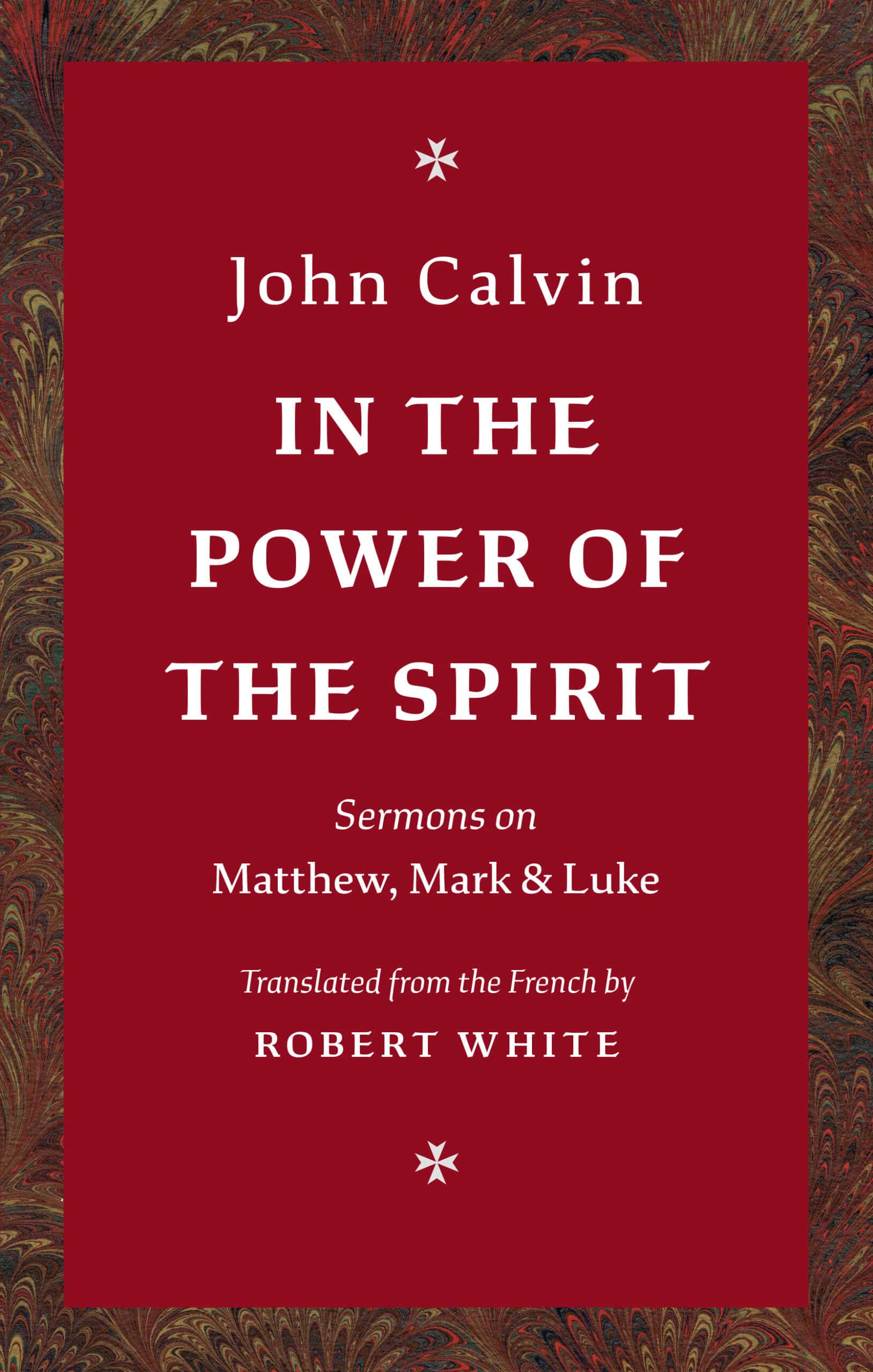
Translated from the French of 1562 by Robert White
Of the many sermons which Calvin preached on the Synoptic Gospels, only the first sixty-five were recorded and published, under the title Sermons on the Harmony or Concordance of the Three Evangelists, Matthew, Mark and Luke (1562). Eighteen of these sermons appear here, for the first time in English translation. They focus on the events of Jesus’ ministry in Galilee: his baptism, his testing by Satan, the calling of his first disciples, his teaching and his works of healing.
In consecutive sermons the preacher traces the drama of Jesus’ confrontation with the forces of darkness and unbelief, which make him a prophet without honour in his own country. For the time being, his identity as Messiah remains hidden. Already, however, he is filled with the Spirit of God who empowers and directs him; already Satan must contend with one stronger than he; already the poor have good news preached to them; already God’s kingdom is present in Jesus’ gracious words and mighty works.
These sermons, the last Calvin was to preach on a New Testament text, reveal the Reformer at his best: a lucid interpreter of Scripture, an engaging preacher, and a pastor passionate to present every soul in his care mature in Christ.
Interview with the Translator
Read Robert White’s reflections on years of Calvin translation, along with his assessment of the work that remains to be done here.
The text is plain and understandable, the messages are clear and consistent, the style matches that of Calvin’s, so I think this is a very good translation of Calvin’s sermons.
Touching Calvin’s sermons, they always show the whole counsel of God, with expositions verse by verse and applications drilled to the core.
One caution of potential contention is: for Calvin, John’s baptism is the same as Christian baptism, so he preached on baptism with full strength and evangelical passion, which I found edifying.
marcdanielrivera –
The sermons compiled in this volume are significant not only for their content but for the context in which they were preached. Calvin was nearing the end of his life, physically frail yet spiritually vigorous. These sermons, preached from 1559 to 1560, demonstrate Calvin’s depth of knowledge and his commitment to biblical exposition. The collection focuses on the early chapters of the Synoptic Gospels—Matthew, Mark, and Luke—and covers key events of Jesus’ ministry, including His baptism, the temptation in the wilderness, and the calling of the first disciples.
Calvin does not merely retell the events of Jesus’ ministry but emphasizes the spiritual battles at play. Jesus’ confrontation with the forces of darkness and His quiet, yet powerful, messianic identity are recurrent themes throughout. Even in his weakest physical condition, Calvin’s passion for the gospel and his conviction of Christ’s sovereignty shine through each sermon.
Furthermore, Calvin’s preaching is both pastoral and doctrinal, addressing the immediate needs of his congregation while presenting the theological dimensions of the gospel accounts. As Calvin expounds on passages like Jesus’ baptism and temptation, he highlights not only the historical significance but also the spiritual warfare between Christ and the powers of evil. Calvin masterfully brings out the Trinitarian nature of the events, emphasizing the Father’s providential plan, the Son’s authority, and the Spirit’s empowering presence.
Repentance and faith are at the heart of Calvin’s message, and these sermons are no exception. From John the Baptist’s call to repentance to Jesus’ own proclamation of the kingdom, Calvin repeatedly urges his congregation to confront their sin and turn to Christ. His sermons often begin with a reminder of human sinfulness, yet they never fail to point toward the grace and mercy found in Jesus. For Calvin, the gospel is both a message of judgment and of hope. Sin is real and its consequences dire, but through Christ’s redemptive work, there is forgiveness and reconciliation with God.
Calvin’s pastoral tone is evident throughout. He does not preach from a position of judgment but from one of compassion, reminding his listeners that repentance is not merely an emotional response but a life-changing commitment. His emphasis on faith is equally prominent, defining it not as mere intellectual assent but as a deep trust in God’s promises. His call to his congregation is clear: turn from sin, trust in Christ, and live in light of the gospel.
Sunny Olsen –
These sermons are wonderful! Any sermon by Calvin is loaded with red meat for spiritual growth and a joy to read. I hope more of them are published. We cannot have too many Calvin sermons. They are worth reading repeatedly and gaining more each time.
Book Description According to J C Ryle, private prayer is the most neglected of all Christian duties. That is most unfortunate because private prayer is the true measure of a Christian’s walk before God and ‘the pith and marrow of practical Christianity’. To bestir his readers to the practice and privilege of private prayer, Ryle […]
A powerful call to preachers to obey Paul’s parting charge to Timothy (2 Tim. 4:2). 24pp.
Audio Sample
⚠️ Sample not available.
Cookie Consent
We use cookies and process personal data to make our site work, for analytics, and for ads personalization. Some of this data is shared with our partners. Open the preferences panel to see which services we use and choose what you allow.
Contains information related to marketing campaigns of the user. These are shared with Google AdWords / Google Ads when the Google Ads and Google Analytics accounts are linked together.
90 days
__utma
ID used to identify users and sessions
2 years after last activity
__utmt
Used to monitor number of Google Analytics server requests
10 minutes
__utmb
Used to distinguish new sessions and visits. This cookie is set when the GA.js javascript library is loaded and there is no existing __utmb cookie. The cookie is updated every time data is sent to the Google Analytics server.
30 minutes after last activity
__utmc
Used only with old Urchin versions of Google Analytics and not with GA.js. Was used to distinguish between new sessions and visits at the end of a session.
End of session (browser)
__utmz
Contains information about the traffic source or campaign that directed user to the website. The cookie is set when the GA.js javascript is loaded and updated when data is sent to the Google Anaytics server
6 months after last activity
__utmv
Contains custom information set by the web developer via the _setCustomVar method in Google Analytics. This cookie is updated every time new data is sent to the Google Analytics server.
2 years after last activity
__utmx
Used to determine whether a user is included in an A / B or Multivariate test.
18 months
_ga
ID used to identify users
2 years
_gali
Used by Google Analytics to determine which links on a page are being clicked
30 seconds
_ga_
ID used to identify users
2 years
_gid
ID used to identify users for 24 hours after last activity
24 hours
_gat
Used to monitor number of Google Analytics server requests when using Google Tag Manager
1 minute
SourceBuster is used by WooCommerce for order attribution based on user source.
Name
Description
Duration
sbjs_first
Traffic origin information for the visitor’s first visit to your store (only applicable if the visitor returns before the session expires)
session
sbjs_current
Traffic origin information for the visitor’s current visit to your store
session
sbjs_first_add
Timestamp, referring URL, and entry page for your visitor’s first visit to your store (only applicable if the visitor returns before the session expires)
session
sbjs_current_add
Timestamp, referring URL, and entry page for your visitor’s current visit to your store
session
sbjs_migrations
Technical data to help with migrations between different versions of the tracking feature
session
sbjs_session
The number of page views in this session and the current page path
30 minutes
sbjs_udata
Information about the visitor’s user agent, such as IP, the browser, and the device type
We use cookies to store information on your computer to provide you with a better user experience when on our website. Continuing to use the website indicates that you agree to cookies being used in line with our cookie policy.







will.kingsman –
The text is plain and understandable, the messages are clear and consistent, the style matches that of Calvin’s, so I think this is a very good translation of Calvin’s sermons.
Touching Calvin’s sermons, they always show the whole counsel of God, with expositions verse by verse and applications drilled to the core.
One caution of potential contention is: for Calvin, John’s baptism is the same as Christian baptism, so he preached on baptism with full strength and evangelical passion, which I found edifying.
marcdanielrivera –
The sermons compiled in this volume are significant not only for their content but for the context in which they were preached. Calvin was nearing the end of his life, physically frail yet spiritually vigorous. These sermons, preached from 1559 to 1560, demonstrate Calvin’s depth of knowledge and his commitment to biblical exposition. The collection focuses on the early chapters of the Synoptic Gospels—Matthew, Mark, and Luke—and covers key events of Jesus’ ministry, including His baptism, the temptation in the wilderness, and the calling of the first disciples.
Calvin does not merely retell the events of Jesus’ ministry but emphasizes the spiritual battles at play. Jesus’ confrontation with the forces of darkness and His quiet, yet powerful, messianic identity are recurrent themes throughout. Even in his weakest physical condition, Calvin’s passion for the gospel and his conviction of Christ’s sovereignty shine through each sermon.
Furthermore, Calvin’s preaching is both pastoral and doctrinal, addressing the immediate needs of his congregation while presenting the theological dimensions of the gospel accounts. As Calvin expounds on passages like Jesus’ baptism and temptation, he highlights not only the historical significance but also the spiritual warfare between Christ and the powers of evil. Calvin masterfully brings out the Trinitarian nature of the events, emphasizing the Father’s providential plan, the Son’s authority, and the Spirit’s empowering presence.
Repentance and faith are at the heart of Calvin’s message, and these sermons are no exception. From John the Baptist’s call to repentance to Jesus’ own proclamation of the kingdom, Calvin repeatedly urges his congregation to confront their sin and turn to Christ. His sermons often begin with a reminder of human sinfulness, yet they never fail to point toward the grace and mercy found in Jesus. For Calvin, the gospel is both a message of judgment and of hope. Sin is real and its consequences dire, but through Christ’s redemptive work, there is forgiveness and reconciliation with God.
Calvin’s pastoral tone is evident throughout. He does not preach from a position of judgment but from one of compassion, reminding his listeners that repentance is not merely an emotional response but a life-changing commitment. His emphasis on faith is equally prominent, defining it not as mere intellectual assent but as a deep trust in God’s promises. His call to his congregation is clear: turn from sin, trust in Christ, and live in light of the gospel.
Sunny Olsen –
These sermons are wonderful! Any sermon by Calvin is loaded with red meat for spiritual growth and a joy to read. I hope more of them are published. We cannot have too many Calvin sermons. They are worth reading repeatedly and gaining more each time.